
The Mind-Bending Art of M.C. Escher
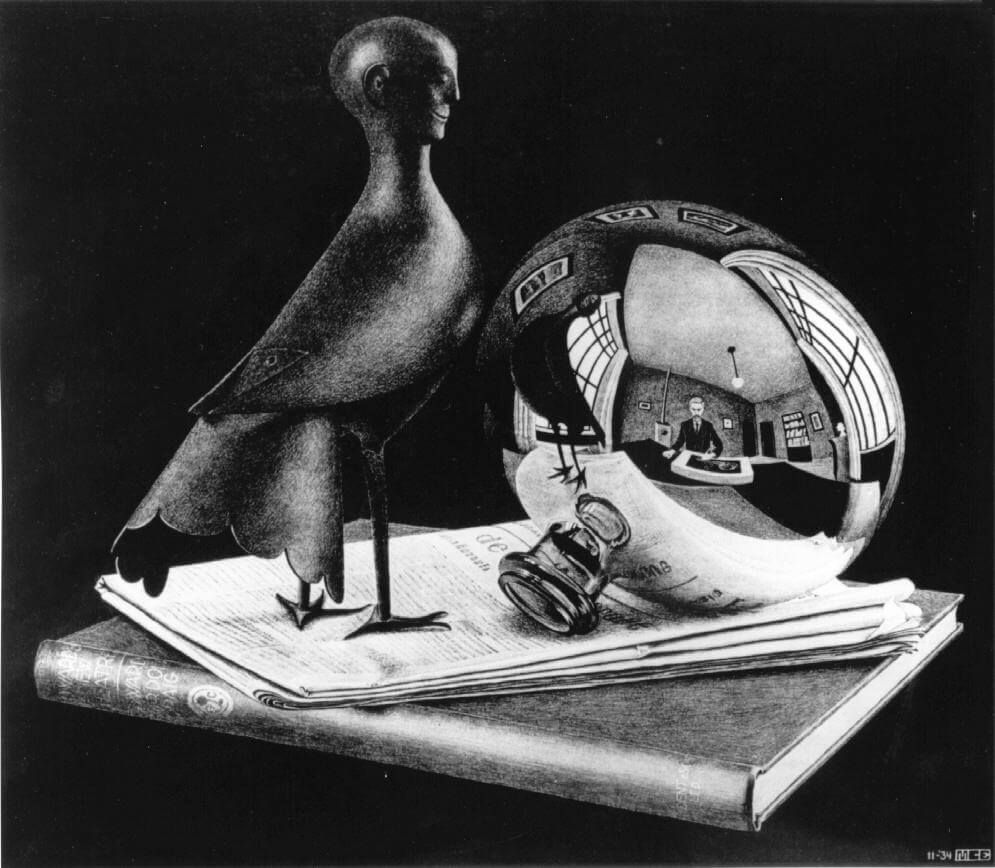
Renowned for his mesmerising and perplexing works, Maurits Cornelis Escher, better known as M.C. Escher, remains one of the most celebrated artists of the 20th century. His intricate and mind-bending creations have captivated audiences worldwide, challenging perceptions of reality and pushing the boundaries of visual art.
Escher’s unique style often featured mathematically inspired designs that played with concepts of infinity, perspective, and optical illusions. His drawings seamlessly blended the worlds of art and mathematics, creating stunning visual puzzles that continue to intrigue viewers to this day.
One of Escher’s most famous works is “Relativity,” a lithograph that depicts a seemingly impossible architectural structure where staircases loop and twist in all directions. This piece exemplifies Escher’s mastery in creating paradoxical scenes that defy conventional logic.
Another iconic work by Escher is “Drawing Hands,” a lithograph showcasing two hands drawing each other in an infinite loop. This clever depiction explores themes of self-reference and recursion, inviting viewers to contemplate the nature of creation and perception.
Throughout his career, M.C. Escher produced a vast body of work that delved into themes such as symmetry, tessellation, and metamorphosis. His meticulous attention to detail and precise execution earned him a reputation as a master of optical illusion and visual trickery.
Escher’s legacy continues to inspire artists, mathematicians, and enthusiasts alike, proving that art can transcend traditional boundaries and challenge our understanding of the world around us. His timeless creations serve as a testament to the boundless creativity and imagination that define true artistic genius.
Exploring the Fascinating World of M.C. Escher: Frequently Asked Questions About His Artworks
- Who was M.C. Escher?
- What is the significance of M.C. Escher’s artworks?
- How did M.C. Escher create his mind-bending illusions?
- What are some of the most famous works by M.C. Escher?
- What themes and concepts did M.C. Escher explore in his art?
- Where can I see M.C. Escher’s artworks on display?
- Did M.C. Escher have formal training in art or mathematics?
- How has M.C. Escher influenced other artists and disciplines?
- Are there any books or documentaries about the life and work of M.C. Escher?
Who was M.C. Escher?
Maurits Cornelis Escher, known as M.C. Escher, was a Dutch artist renowned for his captivating and enigmatic works that merged art and mathematics. Born in 1898, Escher’s intricate drawings and prints often featured mind-bending optical illusions, impossible architectures, and fascinating geometric patterns. His art challenged traditional notions of perspective and reality, inviting viewers to explore the boundaries between imagination and logic. Through his masterful creations, M.C. Escher continues to be celebrated as a visionary artist whose legacy transcends time and inspires wonder in all who encounter his mesmerising works.
What is the significance of M.C. Escher’s artworks?
The significance of M.C. Escher’s artworks lies in their unparalleled ability to merge art and mathematics, creating captivating visual puzzles that challenge the viewer’s perception of reality. Through his intricate designs and mind-bending illusions, Escher explored concepts of infinity, symmetry, and perspective in a way that had never been seen before. His works continue to inspire awe and fascination, serving as a testament to the limitless possibilities of artistic expression and the enduring impact of blending creativity with scientific principles. Escher’s legacy extends far beyond traditional art forms, influencing fields such as mathematics, design, and philosophy, making him a truly visionary artist whose contributions continue to resonate with audiences around the world.
How did M.C. Escher create his mind-bending illusions?
M.C. Escher’s ability to create mind-bending illusions stemmed from his meticulous attention to detail and his deep understanding of mathematical concepts. Through a combination of precise geometric calculations and artistic intuition, Escher was able to craft intricate designs that defied traditional notions of perspective and reality. By exploring themes such as symmetry, tessellation, and optical illusion, Escher pushed the boundaries of visual art and challenged viewers to question their perceptions. His innovative techniques, coupled with a keen eye for composition, allowed him to create captivating works that continue to captivate audiences with their mesmerising complexity and depth.
What are some of the most famous works by M.C. Escher?
M.C. Escher is renowned for a plethora of iconic artworks that have left a lasting impact on the world of visual art. Some of his most famous works include “Relativity,” a mind-bending lithograph featuring impossible staircases, and “Drawing Hands,” which showcases two hands drawing each other in an infinite loop. Escher’s intricate creations such as “Ascending and Descending” and “Waterfall” continue to captivate audiences with their optical illusions and mathematical precision. His exploration of themes like symmetry, tessellation, and metamorphosis in pieces like “Sky and Water I” and “Metamorphosis II” further solidify his reputation as a master of paradoxical imagery and artistic innovation.
What themes and concepts did M.C. Escher explore in his art?
M.C. Escher’s art is renowned for its exploration of themes and concepts that blur the lines between reality and imagination. Through his intricate drawings and prints, Escher delved into the realms of geometry, symmetry, perspective, and optical illusions. He often depicted impossible architectural structures, infinite tessellations, and mind-bending transformations that challenged viewers to question their perceptions of space and form. Escher’s work also delved into themes of paradox, self-reference, and the interconnectedness of all things, inviting contemplation on deeper philosophical ideas while showcasing his unparalleled skill in merging art with mathematics.
Where can I see M.C. Escher’s artworks on display?
For those seeking to experience the mesmerising world of M.C. Escher’s artworks firsthand, a visit to dedicated museums and galleries is essential. Institutions such as the Escher Museum in The Hague, Netherlands, and the M.C. Escher Foundation in Switzerland offer visitors a comprehensive insight into the artist’s life and work. Additionally, many art museums around the world feature rotating exhibitions showcasing Escher’s iconic pieces, providing art enthusiasts with the opportunity to marvel at his mind-bending creations up close. Whether you are drawn to his intricate prints or his fascinating explorations of mathematical concepts, witnessing M.C. Escher’s artworks on display is sure to leave a lasting impression on all who appreciate the intersection of art and illusion.
Did M.C. Escher have formal training in art or mathematics?
M.C. Escher, known for his mesmerising and mind-bending artworks, did not have formal training in art or mathematics. Despite lacking formal education in these fields, Escher’s innate talent and curiosity led him to explore the intersection of art and mathematics on his own terms. Drawing inspiration from his surroundings and delving into mathematical concepts independently, Escher developed a unique style that continues to captivate audiences with its intricate designs and optical illusions. His unconventional approach to art and mathematics showcases the power of self-directed learning and creative exploration in pushing the boundaries of artistic expression.
How has M.C. Escher influenced other artists and disciplines?
M.C. Escher’s profound influence extends far beyond his own artistic creations, resonating with a wide range of artists and disciplines. His innovative approach to blending art and mathematics has inspired countless creators to explore new dimensions of visual expression. Escher’s intricate designs and mind-bending illusions have influenced graphic designers, architects, and filmmakers, sparking a renaissance in the realm of optical art and geometric abstraction. His work has also left a lasting impact on fields such as psychology and cognitive science, where researchers study the perception of space and form through the lens of Escher’s captivating compositions. By challenging conventional perspectives and pushing the boundaries of traditional art forms, M.C. Escher continues to shape the creative landscape for generations to come.
Are there any books or documentaries about the life and work of M.C. Escher?
For those seeking a deeper insight into the life and work of M.C. Escher, there are several books and documentaries available that offer a comprehensive exploration of the renowned artist’s legacy. These resources delve into Escher’s artistic process, his influences, and the intricate themes that permeate his captivating creations. Through detailed narratives and visual storytelling, these books and documentaries provide a rich tapestry of information that sheds light on the enigmatic world of one of history’s most intriguing artists, M.C. Escher.