
Grandma Moses Paintings: A Celebration of Rural American Life
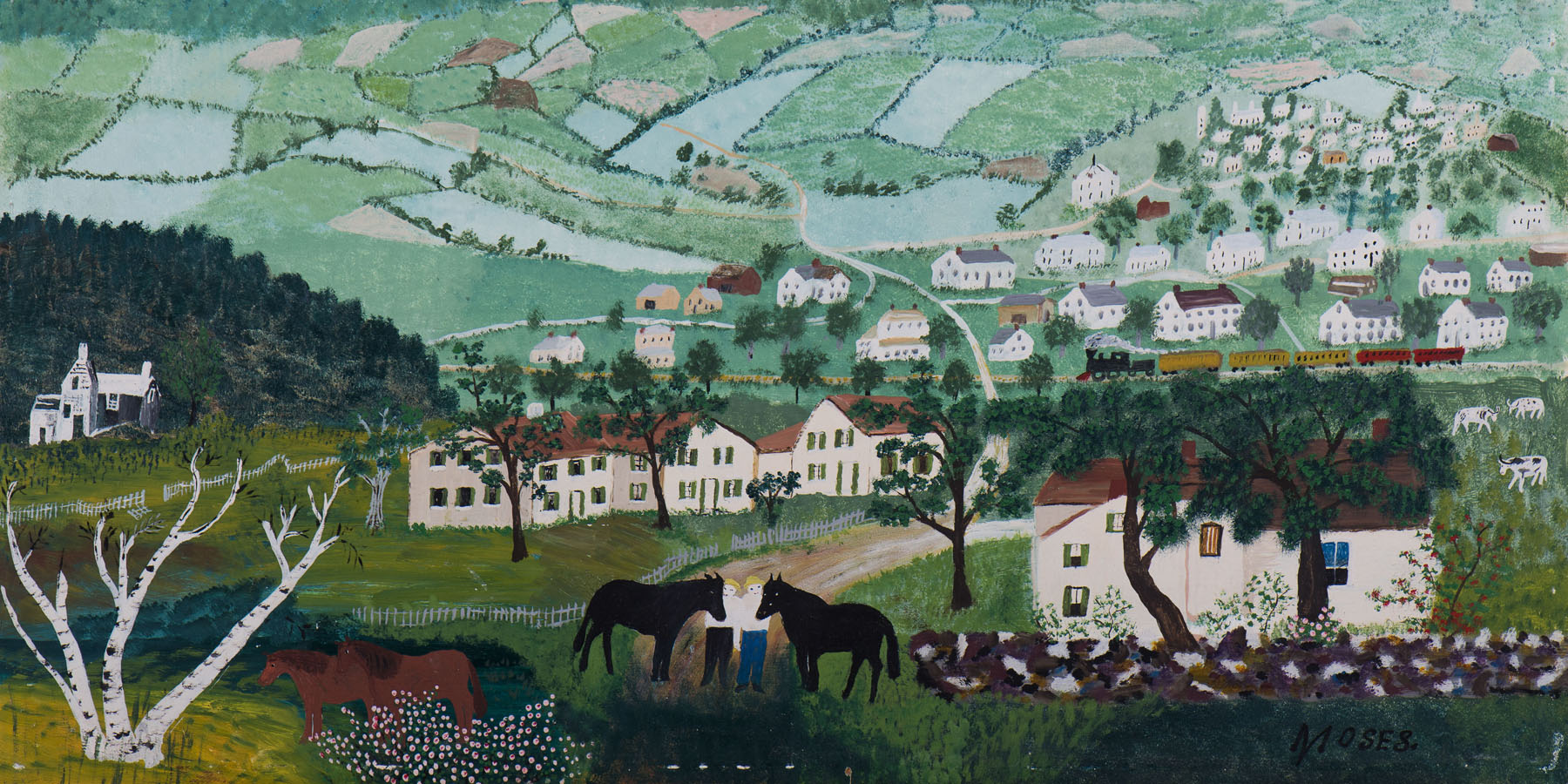
Grandma Moses paintings are instantly recognisable for their colourful scenes of country life, bustling farmyards and snow-covered villages. Their lively details and straightforward charm have made them beloved by generations of viewers. Behind the familiar name was Anna Mary Robertson Moses, an American artist who began painting seriously late in life and became one of the best-known folk artists of the twentieth century.
Who was Grandma Moses?
Anna Mary Robertson Moses was born in 1860 in Greenwich, New York. She grew up in a farming family and spent much of her life working on farms and raising a family. In her later years, arthritis made embroidery difficult, so she turned to painting instead. She was in her late seventies when she began pursuing it in earnest.
Moses had no formal art training. Her pictures grew from personal experience, memories and close observation of rural life. A collector noticed her work in a shop window in the late 1930s, helping to bring it to wider attention. Before long, her paintings were being exhibited and admired across the United States and beyond.
What makes her paintings distinctive?
Grandma Moses’s paintings often show everyday activities unfolding across a broad landscape. People gather crops, travel by horse-drawn sleigh, attend fairs, make maple syrup or prepare for winter. Houses, barns, trees and fields fill the picture, while small figures give each scene a sense of movement and purpose.
Her style is sometimes described as American folk art or naïve art. The term refers to work made outside conventional academic traditions, often with a direct, personal approach to shape and perspective. Moses was not concerned with strict realism. Instead, she arranged people and places so that the story of the scene remained clear and engaging. A single painting might contain many small episodes, inviting the viewer to look closely.
Colour is central to her appeal. Bright reds, greens and yellows bring warmth to her landscapes, while snowy scenes create striking contrasts between white ground and colourful buildings or clothing. The effect is often cheerful, but her pictures also suggest the hard work and seasonal rhythms that shaped rural life.
Memory, seasons and community
Many of Moses’s paintings look back to the countryside of her youth. They are not simply records of a particular moment; they are carefully composed memories of a way of life. The scenes often feel orderly and harmonious, with neighbours working, celebrating or travelling together. This sense of community is one reason her work continues to resonate with audiences.
The changing seasons provide a natural structure for her subjects. Spring brings planting and renewal; summer is a time of activity in the fields; autumn is marked by harvest; and winter transforms the landscape into a setting for sleigh rides and village gatherings. Through these familiar cycles, Moses made ordinary routines feel worth remembering.
Popular paintings and lasting appeal
Among her best-known works is Sugaring Off, which depicts the traditional process of making maple syrup. Other paintings portray farms, village streets and seasonal celebrations, often with the lively detail that defines her work. Rather than relying on grand historical events, Moses found her subjects in the everyday experiences of rural people.
Her success helped bring folk art to a broad audience. The paintings were reproduced in books, on greeting cards and in other popular formats, introducing her imagery to people who might never have visited a gallery. Her work also challenged the idea that an artist must begin young or receive formal training to develop a distinctive voice.
A remarkable artistic legacy
Grandma Moses continued painting into old age and lived to be 101, dying in 1961. Her story is often remembered as an inspiring example of late-life creativity, but her legacy rests above all on the paintings themselves. Their energetic compositions, vivid colours and affectionate attention to everyday life give them a character that remains unmistakable.
Today, Grandma Moses paintings are valued both as records of an imagined rural past and as personal works of art. They invite viewers to slow down, explore the details and share in the artist’s vision of a world shaped by the land, the seasons and the people who lived together there.
Exploring the Charm of Grandma Moses: 7 Tips for Appreciating Her Paintings
- Look for scenes of rural American life.
- Notice the bright, cheerful colours.
- Explore the many tiny details.
- Follow the story unfolding across the canvas.
- Compare winter scenes with summer landscapes.
- Observe how buildings and people share the space.
- Remember that Grandma Moses began painting in her seventies.
Look for scenes of rural American life.
When exploring Grandma Moses paintings, look for scenes of rural American life: farms, village streets, harvests and neighbours gathering for seasonal celebrations. These lively details reflect the rhythms of country life and often draw on Moses’s memories of the past. Take time to look closely, as a single painting may tell several small stories through its people, animals and activities.
Notice the bright, cheerful colours.
Notice the bright, cheerful colours in Grandma Moses’s paintings. Vivid greens, reds, yellows and blues bring energy to her countryside scenes, drawing attention to the changing seasons, busy village life and small details in the landscape. The lively palette gives her work its warmth and makes even everyday activities feel full of character.
Explore the many tiny details.
Take time to explore the many tiny details in Grandma Moses paintings. Look closely and you may spot people at work, animals in the fields, sleighs on snowy roads and lively scenes unfolding around farmhouses and village greens. These small touches add movement and character, turning each picture into a story that rewards a second, closer look.
Follow the story unfolding across the canvas.
Follow the story unfolding across the canvas in a Grandma Moses painting. Rather than focusing on a single figure or moment, let your eye wander through the busy scene: notice the people at work, the journeys between houses and fields, and the small activities taking place in the background. Each detail adds another part to the picture, revealing how Moses transforms everyday rural life into a lively story.
Compare winter scenes with summer landscapes.
Compare Grandma Moses’s winter scenes with her summer landscapes to see how brilliantly she captured the changing seasons. In snowy paintings, crisp whites and cool tones transform farms and villages, while sleighs and bundled-up figures bring movement to the scene. Her summer landscapes, by contrast, are filled with lush greens, warm colours and busy outdoor activities. Looking at the two side by side reveals how she used colour, detail and seasonal routines to evoke the character of rural life throughout the year.
Observe how buildings and people share the space.
When looking at Grandma Moses paintings, notice how buildings and people share the space. Houses, barns and fences are more than background details: they help organise each scene and show how daily life is connected to the landscape. Small figures move between them, working, gathering or celebrating, giving the picture a lively sense of community. Take time to follow these relationships across the canvas and see how each building helps tell the story.
Remember that Grandma Moses began painting in her seventies.
Remember that Grandma Moses began painting seriously in her seventies, after arthritis made it difficult to continue her embroidery. Her story is a reminder that creativity has no age limit: new interests and skills can flourish at any stage of life. As you explore her paintings, consider how her memories, experiences and fresh artistic beginnings shaped the distinctive scenes she went on to create.