
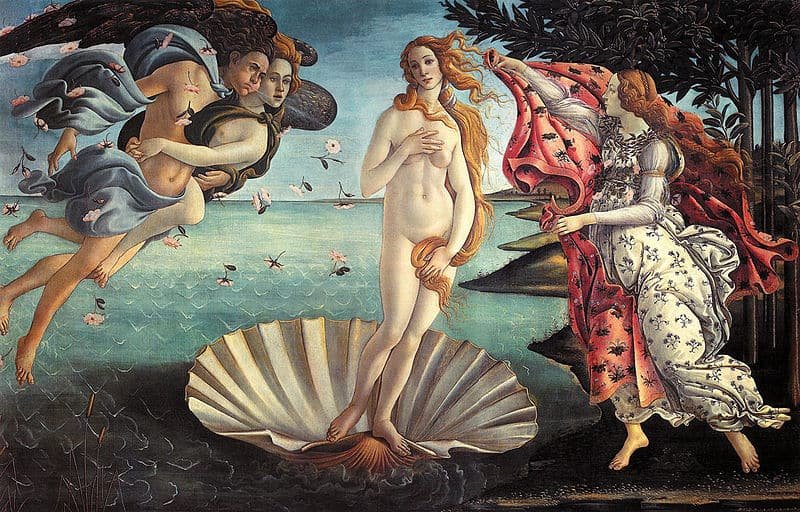
Renaissance-Themed Visual Art: Old Masters, New Perspectives
Renaissance-themed visual art draws on one of the most influential periods in European cultural history. Beginning in Italy in the 14th century and spreading across Europe over the following centuries, the Renaissance brought renewed interest in classical antiquity, human experience and the study of the natural world. Its artists developed ways of depicting people, places and stories that still shape how art is made and understood today.
What defines Renaissance art?
Renaissance art is often associated with careful observation, balanced composition and convincing depictions of space and the human body. Artists studied anatomy, geometry, light and perspective to create images that could feel both ordered and lifelike. Linear perspective, in particular, allowed painters to suggest depth on a flat surface by arranging forms around a shared vanishing point.
Religious subjects remained central, including scenes from the Bible and the lives of saints. Alongside them, artists explored classical mythology, portraiture and historical events. Their work often combined spiritual meaning with close attention to individual expression, clothing, architecture and landscape.
Recognisable themes and imagery
Renaissance-inspired artworks may feature idealised figures, classical columns, arches and domes, or carefully arranged groups of people. Mythological characters such as Venus, Apollo and the Muses are common points of reference, as are symbolic objects drawn from historical paintings. A flower, a book, a fruit or a particular gesture may carry meaning beyond its appearance.
Light and colour also play an important role. Artists may use soft modelling to give faces and bodies a sense of volume, or create contrast between richly coloured costumes and calm architectural settings. These visual choices can suggest harmony, authority, devotion or human vulnerability.
From historical influence to contemporary interpretation
Renaissance-themed visual art does not have to imitate the style of a particular painter or period. Contemporary artists often borrow its visual language while questioning the ideas behind it. They might place modern figures in a classically composed scene, reinterpret a familiar myth, or use Renaissance symbolism to explore identity, power, faith or social change.
Some artists work with traditional materials and techniques, such as oil paint, drawing and printmaking. Others use photography, digital collage, installation or video. The contrast between historical imagery and modern materials can make an artwork feel both familiar and unexpected.
Reinterpretation also offers a way to broaden the stories represented in art. Artists can revisit celebrated compositions from new perspectives, bringing attention to people and experiences that were overlooked or marginalised in many historical narratives. In this way, Renaissance references become a starting point for conversation rather than simply a tribute to the past.
Why the Renaissance still resonates
The enduring appeal of Renaissance art lies partly in its combination of technical skill and human feeling. Its artists sought to understand the world through observation, while also giving form to ideas about beauty, belief and society. Those concerns remain relevant, even as contemporary artists challenge the period’s assumptions and conventions.
Whether it appears in a painting, photograph, sculpture or digital work, Renaissance-themed art invites viewers to look closely at the relationship between past and present. Familiar motifs can prompt questions about how cultural ideals are formed, whose stories are remembered and how an image can acquire new meaning over time.
By engaging with Renaissance imagery in fresh ways, artists keep its visual language alive. The result is not simply a return to an earlier age, but an ongoing exchange between historical tradition and contemporary imagination.
Mastering Renaissance Art: Six Essential Tips for Capturing the Era’s Essence
- Study Renaissance artists such as Leonardo, Michelangelo and Raphael.
- Use balanced compositions and clear geometric forms.
- Create depth with linear perspective and a strong vanishing point.
- Choose rich pigments and warm, natural tones.
- Use light and shadow to model faces and forms.
- Add classical motifs, such as columns, arches or mythological figures.
Study Renaissance artists such as Leonardo, Michelangelo and Raphael.
Study the work of Renaissance artists such as Leonardo da Vinci, Michelangelo and Raphael to understand the techniques and ideas that shaped the period. Look closely at how they used perspective to create depth, arranged figures within a composition, and conveyed emotion through gesture and expression. Comparing their approaches can reveal how each artist developed a distinctive style, while offering inspiration for creating Renaissance-themed visual art with a thoughtful balance of observation, structure and storytelling.
Use balanced compositions and clear geometric forms.
Use balanced compositions and clear geometric forms to give Renaissance-themed artwork a sense of harmony and structure. Arrange figures and objects carefully, using shapes such as circles, triangles and arches to guide the viewer’s eye through the scene. These measured proportions can create visual calm while lending the work a classical feel.
Create depth with linear perspective and a strong vanishing point.
Create a convincing sense of depth by using linear perspective: arrange receding lines so they lead towards a clear vanishing point, perhaps on the horizon or within an architectural feature. This gives buildings, pathways and interiors a convincing sense of space, while guiding the viewer’s eye through the composition. For a Renaissance-inspired effect, keep the perspective deliberate and balanced, using foreground details and gradually smaller forms to reinforce the illusion of distance.
Choose rich pigments and warm, natural tones.
Choose rich pigments and warm, natural tones to evoke the depth and harmony often associated with Renaissance art. Shades such as deep red, ochre, olive green and ultramarine can bring a sense of warmth and richness, while subtle shifts in light and shadow give forms greater depth. Balance these stronger colours with natural hues inspired by skin, stone and landscape to create a composition that feels timeless without becoming overly ornate.
Use light and shadow to model faces and forms.
Use light and shadow to give faces and forms a convincing sense of depth. Notice where the light falls, then build gentle transitions from bright highlights to softer mid-tones and deeper shadows. This careful modelling can bring out a figure’s expression, suggest the texture of fabric or skin, and create a stronger sense of volume—qualities often associated with Renaissance art.
Add classical motifs, such as columns, arches or mythological figures.
Add classical motifs such as columns, arches or mythological figures to give renaissance-themed visual art a sense of historical depth and grandeur. These familiar forms can help establish a classical setting, guide the viewer’s eye and add layers of symbolism. Use them thoughtfully, adapting their scale, colour or arrangement to suit your composition and create a fresh interpretation rather than simply copying the past.