
Famous Art Paintings: Masterpieces That Continue to Captivate
Some paintings become famous for their beauty; others for the stories, ideas or controversies surrounding them. A handful have travelled far beyond galleries and art books to become part of popular culture. From Renaissance portraits to modern scenes of war and anxiety, these works continue to invite new interpretations.
Mona Lisa by Leonardo da Vinci
Painted in the early 16th century, the Mona Lisa is among the best-known portraits in the world. Leonardo da Vinci’s subtle shading gives the sitter’s face a lifelike quality, while her elusive expression has prompted centuries of speculation. The painting is displayed at the Louvre in Paris, where its fame draws visitors from across the globe.
The Last Supper by Leonardo da Vinci
Leonardo’s The Last Supper depicts the moment Jesus tells his disciples that one of them will betray him. Rather than presenting a quiet gathering, the painting shows the disciples reacting with shock and emotion. Painted on a wall in a convent in Milan, it has suffered considerable damage over time, making its preservation a continuing challenge.
The Starry Night by Vincent van Gogh
Created in 1889, The Starry Night is celebrated for its vivid sky, sweeping brushwork and expressive use of colour. Van Gogh painted the view from his room at the Saint-Paul-de-Mausole asylum in southern France, transforming the landscape into a scene that feels both recognisable and dreamlike. The painting is held by the Museum of Modern Art in New York.
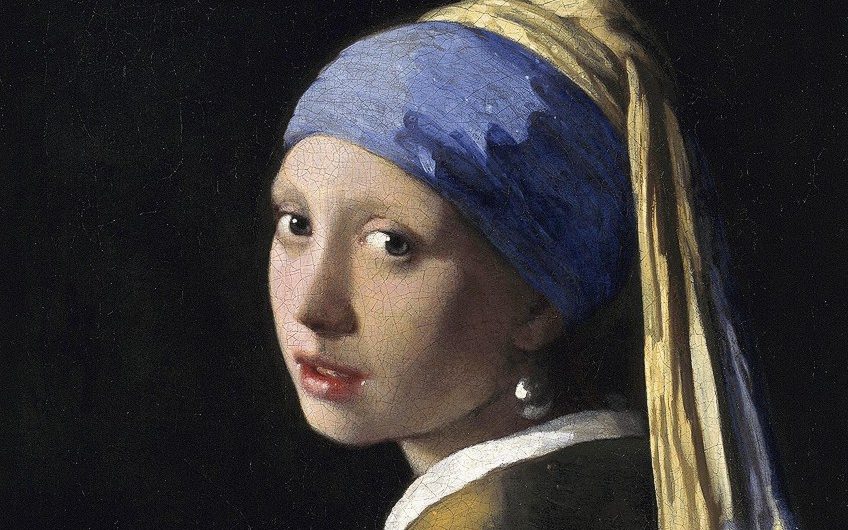
Girl with a Pearl Earring by Johannes Vermeer
Often described as a “tronie” — a character study rather than a conventional portrait — Vermeer’s Girl with a Pearl Earring is known for its dark background, luminous face and striking pearl. The sitter’s identity is unknown, adding to the sense of mystery. Painted around 1665, the work is part of the collection at the Mauritshuis in The Hague.
Guernica by Pablo Picasso
Picasso’s monumental painting Guernica was created in response to the 1937 bombing of the Basque town of the same name during the Spanish Civil War. Its distorted figures and restricted palette convey suffering and chaos without showing the event as a straightforward historical scene. Today, the painting is displayed at the Museo Reina Sofía in Madrid and remains a powerful anti-war image.
The Hay Wain by John Constable
One of the best-loved paintings of the English countryside, Constable’s The Hay Wain shows a horse-drawn cart crossing the River Stour in Suffolk. Completed in 1821, it reflects the artist’s close attention to the landscapes he knew from childhood. Although it is now considered an emblematic image of rural England, it received a more enthusiastic response in France than in Britain when it was first exhibited there.
The Fighting Temeraire by J. M. W. Turner
Turner’s The Fighting Temeraire depicts an old warship being towed towards its final berth, set against a glowing sunset. Painted in 1839, the scene is often read as a meditation on change: the vessel represents an earlier age, while the tugboat signals the arrival of steam power. The painting is part of the National Gallery’s collection in London.
Sunflowers by Vincent van Gogh
Van Gogh painted several still lifes of sunflowers in the late 1880s. Their vivid yellows and energetic brushstrokes make them instantly recognisable, but the series also shows how much can be expressed through variations in colour, texture and arrangement. Different versions are held in museums around the world, including the National Gallery in London.
The Scream by Edvard Munch
Munch’s The Scream is one of the most familiar images in modern art. Its central figure, set against a turbulent sky, has come to represent anxiety and emotional distress. Munch made several versions of the composition in different media. The best-known painted versions are held by museums in Oslo.
Why do famous paintings endure?
Fame alone does not explain why these works continue to matter. Each offers something to look at beyond its immediate subject: a distinctive technique, an intriguing story or an idea that still feels relevant. Viewers may respond differently across generations, finding new meanings in familiar images.
Whether encountered in a gallery or reproduced in a book, a famous painting can reward a closer look. Its colours, details and choices of composition often reveal as much as its reputation does.
Famous Paintings: Six Frequently Asked Questions
- What is the most famous painting in the world?
- Who painted the Mona Lisa?
- Where is the Mona Lisa displayed?
- What is the story behind The Starry Night?
- Which famous paintings can you see in the UK?
- Why are some paintings considered masterpieces?
What is the most famous painting in the world?
The Mona Lisa by Leonardo da Vinci is widely regarded as the most famous painting in the world. Its enigmatic smile, masterful technique and long history have made it an enduring cultural icon, while its home at the Louvre in Paris attracts millions of visitors. Although fame is subjective and other works are equally celebrated, the Mona Lisa remains the painting most often named as the world’s best known.
Who painted the Mona Lisa?
The Mona Lisa was painted by the Italian Renaissance artist Leonardo da Vinci. He is believed to have begun the portrait around 1503, though it may have taken several years to complete. The painting is renowned for its finely observed details and the sitter’s enigmatic expression, and is now displayed at the Louvre in Paris.
Where is the Mona Lisa displayed?
The Mona Lisa is displayed in the Louvre Museum in Paris, France. It is housed in a climate-controlled, protective case in the museum’s Denon Wing, where visitors from around the world come to see Leonardo da Vinci’s famous portrait.
What is the story behind The Starry Night?
Vincent van Gogh painted The Starry Night in June 1889 while staying at the Saint-Paul-de-Mausole asylum in Saint-Rémy-de-Provence, France. The swirling night sky was inspired by the view from his room, although he adapted the landscape and added details, including the village, from imagination. With its vivid colours, animated stars and towering cypress tree, the painting transforms a familiar scene into an intensely expressive vision. It is now held by the Museum of Modern Art in New York.
Which famous paintings can you see in the UK?
The UK is home to many world-famous paintings, including Van Gogh’s Sunflowers, Constable’s The Hay Wain and Turner’s The Fighting Temeraire at the National Gallery in London. Tate Britain displays works such as Millais’s Ophelia, while the National Galleries of Scotland in Edinburgh are home to Raeburn’s The Skating Minister. Museum displays can change, so it is worth checking the gallery’s website before visiting.
Why are some paintings considered masterpieces?
Some paintings are considered masterpieces because they combine exceptional skill with originality, expressive power and lasting influence. Their composition, colour and technique may transform how viewers see a subject, while their ideas or emotional impact continue to resonate across generations. A painting’s reputation can also grow through its place in art history, its influence on other artists and the stories surrounding its creation.