
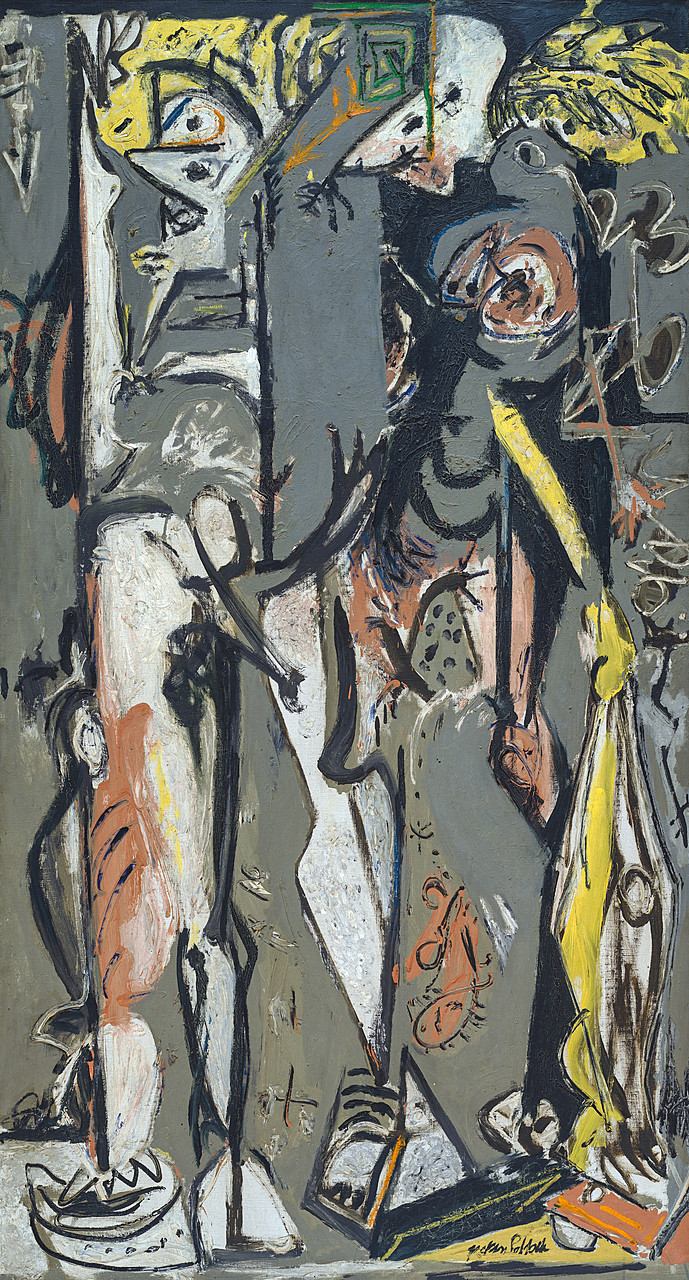
The Revolutionary Art of Jackson Pollock
Jackson Pollock, a seminal figure in the abstract expressionist movement, revolutionised the art world with his unique painting style. Born in 1912 in Wyoming, USA, Pollock’s artistic journey was marked by experimentation, innovation, and a relentless pursuit of creative freedom.
Pollock’s most iconic works are characterised by his signature drip painting technique. By dripping and splattering paint onto canvas laid on the floor, he created intricate and dynamic compositions that challenged traditional notions of art and beauty.
His groundbreaking approach to painting was not just about the final product; it was also a reflection of his inner turmoil, emotions, and subconscious thoughts. Pollock’s paintings were a raw expression of his psyche, inviting viewers to delve deep into the chaotic yet mesmerising world he created.
Despite initial scepticism from critics and audiences, Pollock’s work eventually garnered widespread acclaim for its boldness and originality. His influence on modern art cannot be overstated, as he paved the way for future generations of artists to explore new forms of self-expression and artistic liberation.
Tragically, Pollock’s life was cut short in 1956 at the age of 44. However, his legacy lives on through his timeless masterpieces that continue to captivate and inspire art lovers around the world.
Today, Jackson Pollock remains an enduring symbol of artistic innovation and creative daring. His paintings serve as a testament to the power of individuality, passion, and unbridled imagination in shaping the course of art history.
Mastering the Chaos: 9 Tips for Understanding Jackson Pollock’s Iconic Painting Style
- Jackson Pollock was an American painter known for his unique style of drip painting.
- Pollock often used household paints and brushes to create his artworks.
- His paintings are characterized by chaotic, energetic compositions.
- Pollock’s technique involved dripping or splattering paint onto canvases laid on the floor.
- He believed in the spontaneity and directness of his art, often working quickly and intuitively.
- Pollock’s works can be interpreted in various ways, with some seeing them as expressions of emotion or energy.
- He was a key figure in the abstract expressionist movement that emerged in the 1940s and 1950s.
- Pollock’s art has had a lasting impact on modern painting and continues to influence artists today.
- ‘Autumn Rhythm’ and ‘Blue Poles’ are among Pollock’s most famous works.
Jackson Pollock was an American painter known for his unique style of drip painting.
Jackson Pollock, an American painter renowned for his distinctive technique of drip painting, challenged traditional artistic conventions with his innovative approach. By dripping and splattering paint onto canvas in a spontaneous and energetic manner, Pollock created dynamic and abstract compositions that captured the essence of movement and emotion. His pioneering method of expressionist abstraction revolutionised the art world, cementing his legacy as a trailblazer in modern art history.
Pollock often used household paints and brushes to create his artworks.
Jackson Pollock, known for his revolutionary drip painting technique, frequently utilised household paints and brushes in the creation of his artworks. By employing everyday materials in unconventional ways, Pollock challenged traditional artistic norms and expanded the possibilities of expression through art. This choice not only demonstrated his innovative approach to painting but also highlighted his belief in the democratization of art, making it accessible and relatable to a wider audience.
His paintings are characterized by chaotic, energetic compositions.
Jackson Pollock’s paintings are defined by their chaotic and energetic compositions. Through his revolutionary drip painting technique, Pollock created artworks that exuded a sense of raw energy and frenetic movement. Each splatter and drip of paint on the canvas contributed to the overall dynamic and unpredictable nature of his pieces. The resulting compositions were vibrant, intense, and seemingly spontaneous, inviting viewers to immerse themselves in a world where controlled chaos gave birth to mesmerising beauty.
Pollock’s technique involved dripping or splattering paint onto canvases laid on the floor.
Jackson Pollock’s pioneering technique in painting involved the unconventional method of dripping or splattering paint onto canvases that were laid flat on the floor. This innovative approach allowed Pollock to move around the canvas freely, enabling him to create intricate and dynamic compositions that defied traditional painting conventions. By eschewing the use of brushes and easels, Pollock embraced a more physical and visceral connection with his art, resulting in works that were not only visually striking but also deeply expressive of his inner thoughts and emotions.
He believed in the spontaneity and directness of his art, often working quickly and intuitively.
Jackson Pollock, a visionary artist known for his revolutionary painting techniques, embraced the ethos of spontaneity and directness in his creative process. With a deep-seated belief in the power of intuition, Pollock approached his art with a sense of urgency and immediacy, working swiftly to capture raw emotions and subconscious impulses on canvas. This unbridled approach not only defined his distinctive style but also allowed him to tap into a realm of artistic expression that transcended traditional boundaries, leaving behind a legacy that continues to inspire artists and art enthusiasts worldwide.
Pollock’s works can be interpreted in various ways, with some seeing them as expressions of emotion or energy.
Pollock’s works are open to diverse interpretations, with many viewers perceiving them as powerful expressions of raw emotion and boundless energy. Through his distinctive drip painting technique, Pollock captured the essence of his innermost feelings and thoughts, inviting audiences to immerse themselves in the turbulent yet captivating world he created on canvas. Each splatter and swirl of paint serves as a conduit for exploring the depths of human emotion and the intensity of creative energy, making Pollock’s art a profound and evocative experience for those who engage with it.
He was a key figure in the abstract expressionist movement that emerged in the 1940s and 1950s.
Jackson Pollock was a key figure in the abstract expressionist movement that emerged in the 1940s and 1950s. His pioneering approach to painting, characterised by his innovative drip technique, challenged traditional artistic conventions and redefined the boundaries of creativity. Pollock’s bold and experimental style not only influenced his contemporaries but also left a lasting impact on the trajectory of modern art. His contributions to the abstract expressionist movement continue to be celebrated for their profound influence on artistic expression and freedom.
Pollock’s art has had a lasting impact on modern painting and continues to influence artists today.
Pollock’s art has left an indelible mark on the landscape of modern painting, with its revolutionary techniques and bold experimentation. His innovative approach to art continues to resonate with artists today, inspiring them to push boundaries, challenge conventions, and explore new realms of creative expression. The dynamic energy and emotional depth found in Pollock’s work serve as a timeless source of inspiration for contemporary artists seeking to break free from traditional constraints and forge their own path in the ever-evolving world of art.
‘Autumn Rhythm’ and ‘Blue Poles’ are among Pollock’s most famous works.
‘Autumn Rhythm’ and ‘Blue Poles’ stand out as two of Jackson Pollock’s most renowned and influential works in the realm of abstract expressionism. These masterpieces encapsulate Pollock’s revolutionary drip painting technique, showcasing a harmonious blend of chaos and control on canvas. ‘Autumn Rhythm’ mesmerises viewers with its dynamic energy and intricate layers, while ‘Blue Poles’ captivates with its striking use of colour and movement. Both paintings exemplify Pollock’s unparalleled ability to evoke emotion and provoke contemplation through his innovative approach to art.