
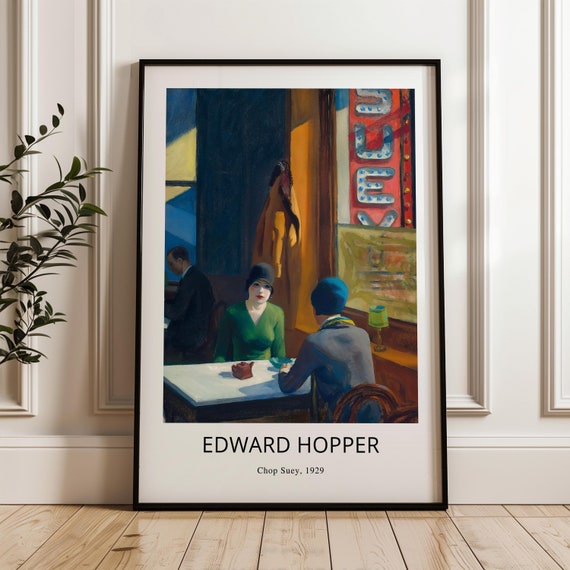
The Timeless Allure of Edward Hopper’s Art
Edward Hopper, an American realist painter, is renowned for his iconic depictions of modern American life in the early to mid-20th century. His works capture a sense of solitude, alienation, and introspection that resonate with viewers across generations.
Hopper’s use of light and shadow creates a mood that is both haunting and evocative. His paintings often feature empty cityscapes, isolated individuals, and stark interiors, inviting contemplation on themes of loneliness and disconnection in the modern world.
One of Hopper’s most famous works is “Nighthawks,” a painting that has become synonymous with urban alienation. The scene of a late-night diner with its lone customers bathed in artificial light has become an enduring symbol of urban isolation and existential longing.
While Hopper’s subject matter may seem melancholic, his mastery of composition and colour imbues his works with a sense of timelessness and beauty. His ability to capture the essence of a moment or emotion has cemented his place as one of the most influential American artists of the 20th century.
Edward Hopper’s art continues to captivate art enthusiasts and scholars alike, sparking discussions on the nature of modernity, individuality, and the human experience. His legacy lives on through his powerful visual narratives that invite viewers to reflect on the complexities of contemporary life.
Exploring Edward Hopper: 8 Insights into the Art of Solitude and Light
- Edward Hopper was known for his realistic paintings of American life.
- His artworks often depict solitude and isolation, capturing a sense of loneliness.
- Hopper’s use of light and shadow creates a strong mood in his paintings.
- Pay attention to the architectural details in Hopper’s works, as they play a significant role in setting the scene.
- Study the composition of his paintings, as Hopper had a unique way of framing his subjects.
- Notice the recurring themes of alienation and introspection in many of Hopper’s pieces.
- Explore how Hopper portrays everyday scenes with a sense of mystery and ambiguity.
- Consider the emotional impact that Hopper’s artworks have on viewers, evoking contemplation and reflection.
Edward Hopper was known for his realistic paintings of American life.
Edward Hopper gained acclaim for his realistic portrayals of American life through his art. His paintings captured the essence of everyday scenes with a keen eye for detail and emotion, offering viewers a glimpse into the complexity of human experience within the American context. Hopper’s ability to infuse ordinary moments with a sense of depth and meaning has solidified his reputation as a master of realism and a significant figure in the history of American art.
His artworks often depict solitude and isolation, capturing a sense of loneliness.
Edward Hopper’s artworks are known for their poignant portrayal of solitude and isolation, effectively capturing a profound sense of loneliness within the scenes he paints. Through his masterful use of light, shadow, and composition, Hopper conveys a haunting atmosphere that resonates with viewers, inviting them to contemplate the complexities of human emotion and the quiet moments of introspection that define his work.
Hopper’s use of light and shadow creates a strong mood in his paintings.
Edward Hopper’s masterful use of light and shadow in his paintings is a defining feature of his artistry, imbuing his works with a palpable sense of mood and atmosphere. The interplay between light and shadow in Hopper’s compositions not only enhances the visual impact of his scenes but also serves to evoke profound emotions and narratives within the viewer. Through carefully crafted contrasts and subtle nuances of illumination, Hopper skillfully captures the essence of solitude, introspection, and existential contemplation that have become hallmarks of his iconic style.
Pay attention to the architectural details in Hopper’s works, as they play a significant role in setting the scene.
In exploring Edward Hopper’s art, it is crucial to pay close attention to the architectural details depicted in his works, as they serve a vital role in establishing the atmosphere and context of each scene. Hopper’s meticulous rendering of buildings, interiors, and urban landscapes not only provides a sense of place but also conveys underlying themes of solitude, alienation, and nostalgia. The architectural elements in Hopper’s paintings act as silent characters that contribute to the overall narrative, inviting viewers to immerse themselves in the intricate world he has created.
Study the composition of his paintings, as Hopper had a unique way of framing his subjects.
Studying the composition of Edward Hopper’s paintings is essential for appreciating the depth of his artistic vision. Hopper had a unique way of framing his subjects, using light, shadow, and perspective to create a sense of atmosphere and emotion within each piece. By analysing how he positioned his characters and elements within the frame, viewers can gain insight into the deliberate choices he made to convey themes of isolation, introspection, and the human experience. Hopper’s mastery of composition adds another layer of complexity to his works, drawing viewers into his world and inviting them to explore the nuances of his storytelling through visual language.
Notice the recurring themes of alienation and introspection in many of Hopper’s pieces.
In Edward Hopper’s art, a striking observation is the recurring themes of alienation and introspection that permeate many of his pieces. Through his masterful use of light, composition, and subject matter, Hopper captures moments of solitude and contemplation in the midst of bustling urban landscapes. His paintings evoke a sense of isolation and inner reflection, inviting viewers to delve into the complexities of human emotions and experiences. This thematic thread running through Hopper’s work adds depth and poignancy to his art, resonating with audiences on a profound and universal level.
Explore how Hopper portrays everyday scenes with a sense of mystery and ambiguity.
In his art, Edward Hopper masterfully captures everyday scenes with a profound sense of mystery and ambiguity. Through his skilful use of light, shadow, and composition, Hopper infuses seemingly ordinary moments with an enigmatic quality that invites viewers to delve deeper into the narratives unfolding within his paintings. The subtle nuances and unresolved tensions in his work create a sense of intrigue, prompting contemplation on the complexities of human emotions and relationships hidden beneath the surface of seemingly mundane settings.
Consider the emotional impact that Hopper’s artworks have on viewers, evoking contemplation and reflection.
When exploring Edward Hopper’s art, it is essential to consider the profound emotional impact that his artworks have on viewers. Hopper’s paintings possess a unique ability to evoke contemplation and reflection, drawing viewers into a world of solitude, longing, and introspection. The poignant scenes depicted in his works often stir up a range of emotions, prompting viewers to delve deeper into the themes of loneliness, isolation, and the complexities of human existence. Through his masterful use of light, shadow, and composition, Hopper invites us to engage with his art on a deeply personal level, encouraging us to ponder our own experiences and connections to the world around us.