
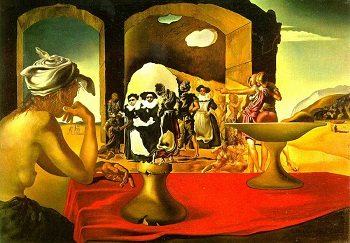
The Surreal World of Salvador Dali’s Artworks
Salvador Dali, the iconic Spanish surrealist artist, is renowned for his groundbreaking and thought-provoking artworks that continue to captivate audiences worldwide. Dali’s unique style, characterized by dreamlike imagery, bizarre juxtapositions, and meticulous attention to detail, has made him one of the most influential artists of the 20th century.
One of Dali’s most famous works is “The Persistence of Memory,” painted in 1931. This iconic piece features melting clocks draped over various objects in a barren landscape, symbolizing the fluidity of time and the subconscious mind. The surrealistic imagery challenges viewers to question their perceptions of reality and time.
Another notable work by Dali is “The Elephants,” a painting that depicts elongated elephants with impossibly spindly legs carrying obelisks on their backs. This enigmatic piece explores themes of memory, power, and the passage of time, inviting viewers to interpret its symbolism in their own unique way.
Dali’s artistic prowess extended beyond painting to other mediums such as sculpture and film. His collaboration with filmmaker Luis Buñuel on the groundbreaking short film “Un Chien Andalou” exemplifies his ability to push artistic boundaries and challenge conventional norms.
Throughout his career, Dali continued to push the boundaries of art with his surrealistic visions and innovative techniques. His legacy lives on through his extensive body of work, which continues to inspire artists and art enthusiasts alike.
Exploring Salvador Dali’s artworks is a journey into the fantastical realms of the subconscious mind, where reality blends seamlessly with imagination. His masterful creations invite us to question our perceptions of reality and embrace the boundless possibilities of artistic expression.
Exploring Salvador Dali’s Artworks: Meanings, Influences, Inspirations, Themes, and Collaborations
- What is the meaning behind Salvador Dali’s melting clocks in ‘The Persistence of Memory’?
- How did Salvador Dali’s surrealistic style influence the art world?
- What inspired Salvador Dali to create his iconic painting ‘The Elephants’?
- What are some key themes explored in Salvador Dali’s artworks?
- How did Salvador Dali’s collaborations with other artists, such as Luis Buñuel, impact his artistic vision?
What is the meaning behind Salvador Dali’s melting clocks in ‘The Persistence of Memory’?
The melting clocks depicted in Salvador Dali’s iconic painting ‘The Persistence of Memory’ are often interpreted as a symbolic representation of the fluidity of time and the relativity of reality. Dali’s surrealistic imagery challenges traditional notions of time as a fixed and linear concept, instead portraying it as malleable and subjective. The drooping, distorted clocks draped over various objects in a dreamlike landscape suggest the fleeting nature of time and the impermanence of existence. Through this enigmatic portrayal, Dali invites viewers to contemplate the elusive nature of time, memory, and consciousness, sparking introspection and prompting a deeper exploration of our perceptions of reality.
How did Salvador Dali’s surrealistic style influence the art world?
Salvador Dali’s surrealistic style had a profound influence on the art world, revolutionising perceptions of reality and pushing the boundaries of artistic expression. By creating dreamlike landscapes filled with bizarre imagery and symbolic motifs, Dali challenged traditional artistic conventions and invited viewers to delve into the depths of the subconscious mind. His meticulous attention to detail and innovative techniques, such as double imagery and distorted perspectives, inspired a new generation of artists to explore unconventional ways of representing the world around them. Dali’s surrealistic style not only sparked a renaissance in avant-garde art but also paved the way for future movements that sought to break free from artistic constraints and embrace the limitless possibilities of creative imagination.
What inspired Salvador Dali to create his iconic painting ‘The Elephants’?
Salvador Dali’s iconic painting ‘The Elephants’ is believed to have been inspired by a variety of sources that reflect the artist’s fascination with the subconscious mind and his exploration of surrealistic imagery. Dali’s interest in the concept of time, memory, and the dream world likely played a significant role in shaping the symbolism found in this enigmatic piece. The elongated elephants with spindly legs carrying obelisks on their backs evoke a sense of mystery and intrigue, inviting viewers to interpret the painting’s meaning through their own unique perspectives. Dali’s ability to blend reality with imagination in ‘The Elephants’ showcases his artistic genius and his unparalleled talent for creating thought-provoking works that continue to captivate audiences around the world.
What are some key themes explored in Salvador Dali’s artworks?
Salvador Dali’s artworks delve into a myriad of key themes that have captivated audiences for generations. One prominent theme in Dali’s art is the exploration of the subconscious mind and dreams, often depicted through surreal and fantastical imagery. His works frequently challenge conventional notions of reality, time, and space, inviting viewers to question their perceptions and delve into the depths of the human psyche. Dali also frequently explores themes of identity, mortality, and sexuality, infusing his art with symbolism and metaphors that spark contemplation and introspection. Through his masterful use of symbolism and meticulous attention to detail, Dali’s artworks continue to intrigue and provoke thought long after they are viewed.
How did Salvador Dali’s collaborations with other artists, such as Luis Buñuel, impact his artistic vision?
Salvador Dali’s collaborations with other artists, such as Luis Buñuel, played a significant role in shaping his artistic vision and pushing the boundaries of surrealism. Working with Buñuel on projects like the groundbreaking film “Un Chien Andalou” allowed Dali to explore new avenues of creativity and experiment with different mediums. These collaborations challenged Dali to think beyond traditional artistic conventions and embrace a more avant-garde approach to his work. The influence of these partnerships can be seen in Dali’s continued exploration of dreamlike imagery, unconventional symbolism, and the subconscious mind in his artworks, demonstrating how collaborative efforts can inspire artists to evolve and expand their artistic horizons.