
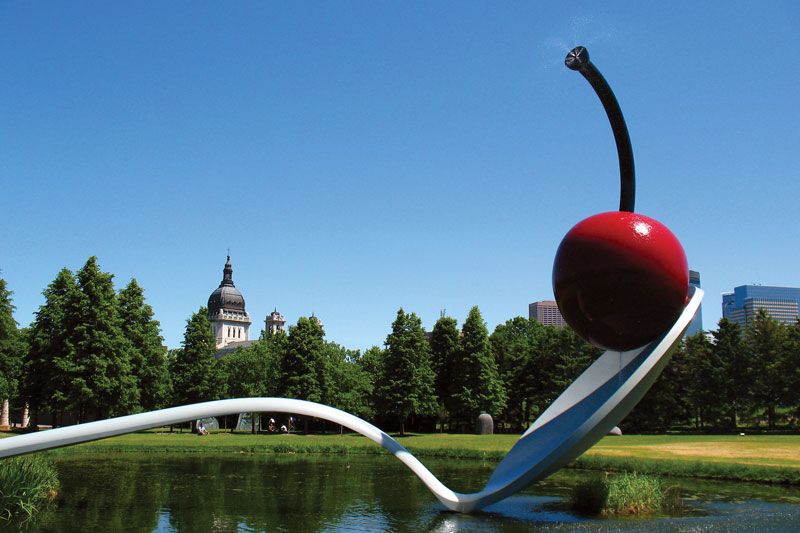
Claes Oldenburg’s Artwork: Everyday Objects on a Monumental Scale
Claes Oldenburg transformed familiar objects into striking works of art. A hamburger, a typewriter eraser or a garden trowel might appear ordinary, but in Oldenburg’s hands such things could become soft, oversized or towering sculptures. His playful approach helped make him one of the most distinctive figures associated with Pop Art.
From shopfronts to soft sculpture
Born in Stockholm in 1929 and raised in the United States, Oldenburg began making work that drew on the sights and materials of everyday urban life. In the early 1960s, he developed The Store, an installation in which he displayed hand-made objects resembling consumer goods, including food and clothing. Roughly modelled and brightly coloured, these pieces challenged the polished appearance of commercial products while turning an ordinary shop into an artistic environment.
Oldenburg also became known for his “soft sculptures”. Made from materials such as vinyl and canvas, these works gave solid objects an unexpected pliability. A telephone or piece of food could sag, slump or appear almost alive. By changing an object’s material and shape, Oldenburg encouraged viewers to look again at things they might otherwise overlook.
Making the familiar monumental
From the 1960s onwards, Oldenburg explored the opposite transformation: taking small, everyday things and enlarging them to an extraordinary scale. His public sculptures bring familiar objects into parks, streets and civic spaces, where their size makes them impossible to ignore.
Among the best-known examples are Clothespin (1976), a giant steel sculpture in Philadelphia, and Spoonbridge and Cherry (1985–88), created with his wife and artistic collaborator Coosje van Bruggen for the Minneapolis Sculpture Garden. In Kansas City, their Shuttlecocks (1994) turn badminton birdies into enormous features of the Nelson-Atkins Museum of Art’s grounds.
These works are often humorous at first glance. Yet their scale also changes the way people experience a place. A spoon becomes a landmark; a clothespin takes on the presence of a monument. Oldenburg’s sculptures invite passers-by to pause, play and reconsider the relationship between art and public space.
A lasting collaboration
From the late 1970s, Oldenburg worked closely with Coosje van Bruggen, developing large-scale projects together. Van Bruggen contributed to the conception and realisation of many of their major public sculptures, and their collaboration became central to his later career. Together, they brought wit and surprise into settings traditionally associated with more formal monuments.
Why Oldenburg’s work still matters
Oldenburg’s art is accessible without being simple. Its recognisable subjects offer an immediate point of connection, while its changes of size, material and setting prompt deeper questions. What makes an object important? How does scale affect our sense of value? And can something as ordinary as a spoon or a shoe become a source of wonder?
Through humour and invention, Oldenburg gave everyday objects a new presence. His work continues to delight audiences while reminding them that the familiar world can look extraordinary when seen from a different angle. Claes Oldenburg died in 2022, but his playful reimagining of ordinary life remains visible in collections and public spaces around the world.
Nine Reasons to Celebrate Claes Oldenburg’s Art
- Transforms everyday objects into striking art.
- Uses humour to engage viewers.
- Makes familiar things feel surprising.
- Explores scale in inventive ways.
- Brings sculpture into public spaces.
- Encourages people to see objects differently.
- Combines accessibility with artistic depth.
- Creates memorable, playful landmarks.
- Continues to inspire artists and audiences.
Seven Criticisms of Claes Oldenburg’s Artwork
- Some works can feel more playful than profound.
- The humour may not appeal to every viewer.
- Monumental sculptures can dominate their surroundings.
- Soft sculptures may seem fragile or dated.
- The focus on consumer objects can feel repetitive.
- Large public works are costly to maintain.
- The concept may overshadow craftsmanship for some viewers.
Transforms everyday objects into striking art.
One of the most distinctive qualities of Claes Oldenburg’s artwork is his ability to transform everyday objects into striking art. By enlarging familiar items such as spoons, clothespins and food, or reshaping them in unexpected materials, he encourages people to see ordinary things in a new light. His playful sculptures combine humour with visual impact, turning objects from daily life into memorable works that invite curiosity and delight.
Uses humour to engage viewers.
Claes Oldenburg uses humour to make his artwork welcoming and memorable. By turning everyday objects into oversized sculptures or soft, sagging forms, he gives familiar things an unexpected twist that often makes viewers smile. This playful approach invites people to stop, look more closely and enjoy the work, while also encouraging them to see ordinary objects in a new way.
Makes familiar things feel surprising.
Claes Oldenburg’s artwork makes familiar things feel surprising by changing their scale, material or setting. A spoon, a clothespin or a piece of food becomes impossible to overlook when it is enlarged into a monumental sculpture or made to droop like soft fabric. This playful transformation encourages people to see everyday objects with fresh eyes and discover a sense of humour and wonder in the ordinary.
Explores scale in inventive ways.
Claes Oldenburg explored scale in inventive ways, transforming everyday objects into sculptures that were either unexpectedly soft or monumentally large. By enlarging familiar items such as a spoon, a clothespin or a shuttlecock, he encouraged people to see ordinary things from a fresh perspective. These surprising changes in size also altered the way viewers experienced public spaces, turning playful objects into memorable landmarks.
Brings sculpture into public spaces.
One of the great strengths of Claes Oldenburg’s artwork is the way it brings sculpture into public spaces, making art part of everyday life rather than something seen only in galleries. His monumental sculptures, often inspired by familiar objects, invite passers-by to pause, explore and see their surroundings differently. By placing playful works in parks, streets and civic settings, Oldenburg made sculpture more accessible and created shared landmarks for local communities and visitors alike.
Encourages people to see objects differently.
Claes Oldenburg’s artwork encourages people to see everyday objects differently. By enlarging familiar items, changing their materials or placing them in unexpected settings, he makes viewers pause and reconsider things they might usually take for granted. A spoon, a clothespin or a piece of food becomes more than a practical object: it can be humorous, surprising and worthy of attention. This playful shift in perspective invites people to notice the creativity and meaning hidden in ordinary surroundings.
Combines accessibility with artistic depth.
One of the great strengths of Claes Oldenburg’s artwork is its ability to combine accessibility with artistic depth. His sculptures often depict familiar objects, such as a spoon, a typewriter eraser or a piece of food, giving viewers an immediate point of connection. Yet their unexpected scale, materials and settings invite deeper reflection on consumer culture, public space and the way everyday things shape our lives. The humour and recognisable forms draw people in, while the ideas behind them reward closer attention.
Creates memorable, playful landmarks.
Claes Oldenburg’s public sculptures turn familiar objects into memorable, playful landmarks. By enlarging things such as a clothespin, spoon or shuttlecock to monumental proportions, he adds humour and surprise to everyday surroundings. These instantly recognisable works invite people to stop, look and interact with their environment, while giving public spaces a distinctive character that stays in the memory.
Continues to inspire artists and audiences.
Claes Oldenburg’s artwork continues to inspire artists and audiences through its playful reimagining of everyday objects. By changing their scale, materials and context, he showed how familiar things could become surprising, humorous and thought-provoking. His inventive approach encourages artists to experiment and invites audiences to look more closely at the world around them, finding fresh possibilities in the ordinary.
Some works can feel more playful than profound.
One criticism of Claes Oldenburg’s artwork is that its humour and playful scale can sometimes seem to outweigh deeper meaning. Enlarged everyday objects are immediately engaging, but some viewers may find that the visual joke is more memorable than any ideas behind it. For them, the work’s light-hearted approach can feel more entertaining than profound, particularly when the sculpture offers little beyond its initial surprise.
The humour may not appeal to every viewer.
Claes Oldenburg’s playful humour is central to the appeal of his artwork, but it may not resonate with every viewer. Some people may find his oversized, everyday objects amusing and imaginative, while others could see them as too whimsical or lacking in seriousness. The jokes can also feel simple at first glance, meaning that viewers who prefer more solemn or traditionally beautiful art may not connect with his work.
Monumental sculptures can dominate their surroundings.
Although Claes Oldenburg’s monumental sculptures are designed to surprise and delight, their sheer size can sometimes dominate the places around them. A giant everyday object may draw attention away from nearby buildings, artworks or natural features, changing the character of a public space. For some viewers, this visual impact is part of the appeal; for others, it can feel overwhelming or out of keeping with its surroundings.
Soft sculptures may seem fragile or dated.
One possible drawback of Claes Oldenburg’s soft sculptures is that their materials and deliberately sagging forms can seem fragile, particularly when compared with more permanent-looking works in stone or bronze. Some viewers may also feel that their unconventional, fabric-based appearance has become dated, reflecting the experimental design and popular culture of the 1960s. However, these qualities are part of the works’ original challenge to traditional ideas about what sculpture should look like.
The focus on consumer objects can feel repetitive.
One criticism of Claes Oldenburg’s work is that its focus on familiar consumer objects can sometimes feel repetitive. His oversized sculptures and soft versions of everyday items are instantly recognisable, but viewers may feel that the same idea is revisited without enough variation. For some, the humour and surprise of seeing an ordinary object transformed can lose its impact over time, particularly when similar subjects recur across different works.
Large public works are costly to maintain.
A drawback of Claes Oldenburg’s large public sculptures is the cost of maintaining them. Exposed to weather, pollution and heavy public use, these works may need regular cleaning, repairs and specialist conservation to protect their materials and keep them safe. The expense can place a long-term burden on the organisations or communities responsible for them, particularly when budgets are limited.
The concept may overshadow craftsmanship for some viewers.
For some viewers, the concept behind Claes Oldenburg’s artwork can overshadow its craftsmanship. The humour and dramatic scale of a giant everyday object often attract attention first, leaving the technical skill involved in designing, constructing and installing the sculpture less immediately apparent. As a result, people may focus on the clever idea rather than the materials, engineering and careful making that bring it to life.