
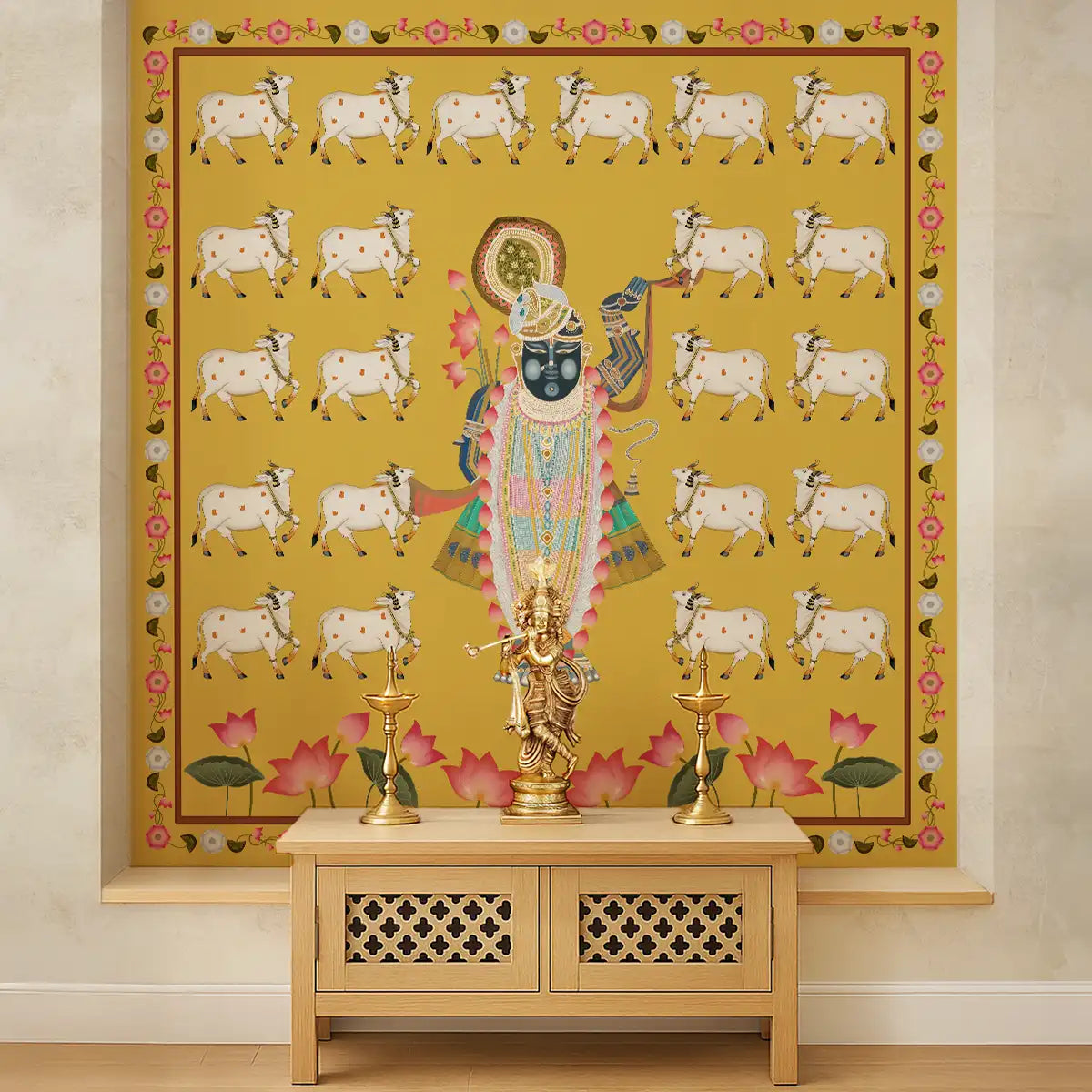
Pichwai Art: Stories of Devotion, Colour and Craft
Pichwai art is a traditional Indian painting style known for its richly detailed depictions of Shrinathji, a form of Krishna, and the ceremonies surrounding his worship. Made on cloth and often displayed behind or near an image of the deity, Pichwais combine religious storytelling with a remarkable command of colour, pattern and composition.
Origins in Nathdwara
The tradition is closely associated with Nathdwara, a town in Rajasthan that became an important centre of Krishna worship after the image of Shrinathji was brought there in the 17th century. Pichwai paintings were created for the temple and its devotional community. Their subjects often reflect the calendar of rituals and festivals, changing with the season and the occasion.
The word pichwai is commonly understood to refer to a backdrop placed behind the deity. These paintings were not originally made simply as decorative pictures. They formed part of a living devotional setting, helping to transform the shrine and express the mood of a particular celebration.
What appears in a Pichwai painting?
Shrinathji is the central figure in many Pichwais, shown with one arm raised in the familiar pose associated with Krishna lifting Mount Govardhan. Around him, artists may depict cows, lotus flowers, peacocks, gopis, trees, musicians and scenes from Krishna’s life. Each element can carry devotional or symbolic meaning, while also contributing to the painting’s intricate visual rhythm.
Many works are connected to particular times of year. A painting might evoke the monsoon with dark clouds and lush foliage, or celebrate autumn with lotus ponds and moonlit scenes. Others are made for festivals such as Janmashtami, the celebration of Krishna’s birth, or Annakut, when offerings of food are presented to the deity.
Materials and making
Traditional Pichwai paintings are produced on cloth, which is prepared before the design is drawn and painted. Artists build up the composition through carefully controlled layers, using fine brushes to render faces, ornaments, flowers and decorative borders. Natural pigments were historically used, although materials and methods vary between artists and workshops today.
The process demands patience and precision. Repeated motifs and fine details can make a single painting a substantial undertaking. Gold and other metallic finishes may be added to create highlights, particularly in works made for ceremonial display. The scale can also be striking: some Pichwais are large enough to fill the wall behind a shrine.
A tradition that continues to evolve
Pichwai remains an active art form, sustained by artists and craftspeople who pass on knowledge of its imagery and techniques. While many works continue to serve devotional purposes, Pichwai motifs are also encountered in galleries, private collections and contemporary design. Artists may adapt the traditional vocabulary, using new materials or formats while retaining connections to its spiritual and regional roots.
This wider visibility has brought new audiences to Pichwai, but it also makes it important to understand the context behind the images. The paintings are more than decorative patterns: they belong to a tradition shaped by worship, ritual, skilled craftsmanship and the cultural history of Nathdwara.
The enduring appeal of Pichwai
Pichwai art draws people in through its vivid colours and intricate surfaces, then rewards closer attention with layers of meaning. A cow, flower or changing sky may help tell a devotional story as well as create a beautifully balanced composition. That combination of visual richness and spiritual purpose gives Pichwai its distinctive character—and helps explain why the tradition continues to inspire artists and admirers today.
Pichwai Art: Frequently Asked Questions on Its Origins, Symbolism, Techniques and Authenticity
- What is Pichwai art?
- What is the history and origin of Pichwai paintings?
- What do the symbols and figures in Pichwai art represent?
- How are traditional Pichwai paintings made?
- How can you tell if a Pichwai painting is authentic?
What is Pichwai art?
Pichwai art is a traditional Indian style of painting, closely associated with Nathdwara in Rajasthan and the worship of Shrinathji, a form of Krishna. Traditionally painted on cloth and displayed behind the deity in a shrine, Pichwais depict devotional stories, festivals and seasonal scenes, often featuring cows, lotus flowers, peacocks and intricate decorative patterns. Known for their vivid colours and fine detail, these works are both expressions of artistic skill and part of a living devotional tradition.
What is the history and origin of Pichwai paintings?
Pichwai paintings originated in Nathdwara, Rajasthan, after the image of Shrinathji—a form of Krishna—was brought there in the 17th century. Created by artists for the temple and its devotional community, these detailed cloth paintings were hung behind the deity as part of worship; the name “Pichwai” is commonly linked to their position behind the image. Their subjects often reflect religious stories, festivals and seasonal rituals, making each painting both a work of art and an expression of devotion.
What do the symbols and figures in Pichwai art represent?
The symbols and figures in Pichwai art express stories of devotion to Shrinathji, a form of Krishna, and reflect the rituals and seasons of the temple. Shrinathji is usually the central figure, while cows often signify abundance and devotion, lotus flowers suggest purity, and peacocks evoke beauty and the monsoon. Gopis, trees, musicians and scenes from Krishna’s life add further layers of meaning. Their precise significance can vary between paintings, but together these details create a devotional setting and celebrate Krishna’s relationship with nature and his followers.
How are traditional Pichwai paintings made?
Traditional Pichwai paintings are usually made on prepared cloth, which is stretched or otherwise treated to create a smooth surface. The artist sketches the design, then builds up the image with layers of colour, using fine brushes to paint intricate details such as flowers, cows, jewellery and patterns. Traditional works may use natural pigments and include gold or other metallic highlights, though materials vary between artists. The process is meticulous and can take many days or longer, depending on the painting’s size and complexity.
How can you tell if a Pichwai painting is authentic?
Authenticating a Pichwai painting usually involves considering several clues rather than relying on one feature. Look for details of its provenance, such as records of ownership, information about the artist or workshop, and any certificates or purchase documentation. Traditional materials, hand-painted details and imagery consistent with the Nathdwara Pichwai tradition can offer useful context, but styles and techniques vary, and reproductions may imitate them closely. For a valuable or older work, seek an assessment from a reputable specialist in Indian art; visual inspection alone cannot reliably confirm authenticity.