
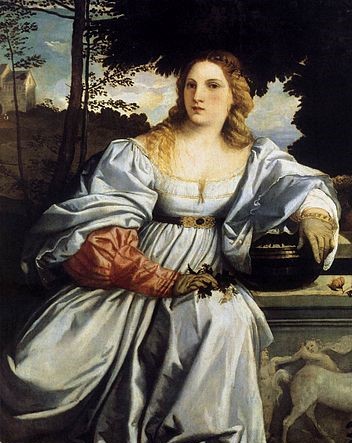
Renaissance Visual Art: A New Way of Seeing the World
Renaissance visual art transformed the way people represented the human body, the natural world and the spaces in which they lived. Emerging in Italy during the 14th century and flourishing across Europe over the following centuries, it drew inspiration from the art and ideas of ancient Greece and Rome. Yet the Renaissance was not simply a return to classical styles: it was also a period of experimentation, observation and fresh ambition.
What does “Renaissance” mean?
The word Renaissance means “rebirth”. The term describes a broad cultural movement that placed renewed emphasis on classical learning, human potential and the study of the natural world. In visual art, these interests encouraged artists to look closely at anatomy, light, proportion and perspective.
Religious subjects remained central to much Renaissance art, particularly in church commissions. At the same time, artists increasingly explored portraits, classical mythology, landscapes and scenes from everyday life. Their work reflected a changing society in which wealthy families, civic institutions and religious organisations commissioned art to express faith, status and cultural identity.
Perspective and the illusion of space
One of the Renaissance’s most influential developments was the use of linear perspective. By organising lines so that they appear to converge at a point in the distance, artists could create convincing impressions of depth on a flat surface. This helped paintings feel more like windows onto a coherent, three-dimensional world.
Artists also studied how objects become smaller with distance and how colour and detail soften in the background. These observations helped create more naturalistic landscapes and interiors. Perspective became a powerful tool, although artists did not always use it in the same way: some prioritised mathematical order, while others adapted it for expressive or decorative effect.
The human figure and close observation
Renaissance artists paid close attention to the human body. Through observation, drawing and the study of classical sculpture, they developed a more detailed understanding of anatomy, movement and proportion. Figures could appear weighty and individual, with gestures and expressions that suggested character and emotion.
This interest in the human figure was part of humanism, a movement that placed value on human experience and achievement. It did not replace religious belief, but it encouraged artists to present sacred figures with greater physical presence and emotional depth. Portraits, too, became increasingly important, recording not only a person’s appearance but also their social standing and personality.
New techniques and materials
Renaissance art developed through the use of varied materials and techniques. In Italy, fresco painting—applying pigment to wet plaster—was widely used for large wall decorations. Panel paintings were often made with tempera, in which pigments were mixed with a binding medium. Over time, oil painting became increasingly popular, particularly in northern Europe. Its slow drying time allowed artists to blend colours, build delicate layers and capture fine details.
Printmaking also helped images and ideas travel further. Engravings and woodcuts could be reproduced and circulated, bringing the work of artists to audiences beyond the cities where it was made. Sculpture flourished as well, in marble, bronze and other materials, with artists drawing on classical examples while developing their own approaches to form and movement.
Different traditions across Europe
The Renaissance took different forms in different regions. Italian artists often focused on perspective, idealised proportion and the legacy of classical antiquity. In northern Europe, painters became known for close attention to texture, surface and everyday detail. Oil painting was particularly suited to rendering fabrics, glass, metal and the subtleties of light.
These distinctions were never absolute. Artists travelled, artworks circulated, and ideas crossed borders. The Renaissance was not a single style shared uniformly across Europe, but a varied collection of artistic developments shaped by local traditions, patrons and religious cultures.
Artists who shaped the period
Among the best-known Renaissance artists are Leonardo da Vinci, whose work combined close observation with scientific curiosity; Michelangelo, celebrated for his painting and sculpture; and Raphael, admired for his balanced compositions. In northern Europe, artists including Jan van Eyck, Albrecht Dürer and Pieter Bruegel the Elder made distinctive contributions through portraiture, printmaking and scenes of daily life.
These artists were part of a much wider creative world. Workshops, assistants and patrons all played an important role in producing and circulating art. Many works were collaborative, and the reputation of a celebrated artist could rest on the efforts of an entire studio.
A lasting influence
Renaissance visual art shaped later ideas about realism, composition and the status of the artist. Its methods continued to influence European painting and sculpture for centuries, while its works remain a major part of museums, churches and public collections around the world.
Its importance lies not only in technical innovation. Renaissance artists developed new ways to make images feel present, expressive and carefully observed. By combining inherited traditions with curiosity about the world around them, they created works that continue to invite close looking and fresh interpretation.
Renaissance Visual Art: A Legacy of Perspective, Humanism, and Innovation
- Introduced convincing perspective and depth.
- Celebrated human anatomy and expression.
- Blended classical inspiration with fresh ideas.
- Advanced painting, sculpture and printmaking.
- Captured rich detail, light and texture.
- Continues to inspire artists and audiences.
Challenges in Renaissance Art: Idealisation, Patronage Dependence, and Gender Inequality
- Often idealised the human form and underrepresented ordinary lives.
- Art production depended heavily on wealthy patrons and the Church.
- Women artists faced significant barriers to training and recognition.
Introduced convincing perspective and depth.
Renaissance artists developed techniques that made flat images appear convincingly three-dimensional. Linear perspective guided the viewer’s eye towards a distant vanishing point, while careful use of scale, light and detail suggested depth and distance. These innovations gave paintings a stronger sense of space and realism, drawing viewers into the scenes depicted.
Celebrated human anatomy and expression.
Renaissance visual art celebrated the human form with a new level of anatomical accuracy and expressive detail. Through careful observation and the study of proportion and movement, artists created figures that felt lifelike, balanced and full of presence. Subtle gestures and facial expressions also gave subjects a stronger sense of personality and emotion, helping viewers connect with the stories and people depicted.
Blended classical inspiration with fresh ideas.
Renaissance visual art brought the forms and ideas of ancient Greece and Rome into conversation with new ways of seeing the world. Artists drew on classical balance, proportion and mythology, while experimenting with perspective, anatomical observation, naturalistic light and expressive emotion. This blend of inherited inspiration and fresh ideas gave Renaissance art a distinctive character: rooted in the past, yet ambitious in its portrayal of people, space and the natural world.
Advanced painting, sculpture and printmaking.
A major strength of Renaissance visual art was the remarkable development of painting, sculpture and printmaking. Artists refined techniques such as linear perspective, realistic shading and oil painting, giving their works greater depth, detail and emotional impact. Sculptors created lifelike figures with a convincing sense of movement, while advances in engraving and woodcut printing made images easier to reproduce and share. Together, these innovations expanded what artists could achieve and helped ideas travel across Europe.
Captured rich detail, light and texture.
Renaissance visual art is celebrated for its rich detail and sensitive treatment of light and texture. Artists carefully observed the world around them, using subtle shading, layered colours and precise brushwork to make fabrics, skin, landscapes and objects feel lifelike. Their skill with light gave figures depth and atmosphere, while finely rendered surfaces invited viewers to look more closely. This attention to detail helped make Renaissance paintings vivid, engaging and remarkably convincing.
Continues to inspire artists and audiences.
Renaissance visual art continues to inspire artists and audiences through its striking balance of technical skill, imaginative storytelling and close observation of the world. Its use of perspective, expressive figures and carefully composed scenes still offers artists ideas to explore, adapt and challenge. For audiences, these works remain compelling because they bring history, emotion and human experience vividly to life, encouraging fresh interpretations across generations.
Often idealised the human form and underrepresented ordinary lives.
A limitation of Renaissance visual art is that it often idealised the human form, presenting figures as balanced, youthful and physically perfect rather than reflecting the full variety of real bodies. Many works also focused on religious stories, classical subjects and wealthy patrons, leaving the experiences of ordinary people less visible. As a result, Renaissance art can offer a selective view of society, celebrating beauty and status while giving less attention to everyday lives and struggles.
Art production depended heavily on wealthy patrons and the Church.
Renaissance art depended heavily on wealthy patrons and the Church, who often decided what was made, how it was presented and who could see it. Artists relied on commissions from religious institutions, ruling families and affluent individuals, which could limit their creative freedom and favour subjects that reflected a patron’s beliefs, status or political influence. As a result, themes outside these priorities received less support, while access to art and its messages was often shaped by the interests of those who funded it.
Women artists faced significant barriers to training and recognition.
Women artists faced considerable barriers during the Renaissance. They were often excluded from formal apprenticeships, academies and life-drawing classes, which limited their access to the training and professional networks available to men. Social expectations could also restrict their ability to work independently or travel for commissions, while their achievements were frequently overlooked or attributed to male relatives and teachers. Although artists such as Sofonisba Anguissola and Lavinia Fontana built successful careers, their experiences were exceptional in a world where women had to overcome significant obstacles to gain recognition.