
Francisco Goya Paintings: A Guide to the Artist and His Work
Francisco Goya (1746–1828) was one of Spain’s most influential artists. His paintings range from lively scenes of everyday life to portraits of the royal court and haunting images of war, superstition and human suffering. This remarkable variety makes Goya’s work a vivid record of his age—and a powerful influence on later artists.
From tapestry designs to court painter
Goya began his career designing cartoons for tapestries made for the Spanish royal residences. These works often show people enjoying ordinary pastimes: dancing, playing games and spending time outdoors. The Parasol (1777) is a well-known example, with its bright colours and relaxed scene. The tapestry cartoons reveal Goya’s gift for observation and his ability to make everyday life engaging.
In time, Goya became a leading portrait painter and was appointed First Court Painter to Charles IV in 1799. His portraits show the status and character of their subjects, but they are not simply flattering likenesses. In Charles IV of Spain and His Family (1800–01), the royal family are presented in a richly detailed group portrait. Goya’s direct gaze and careful attention to individual faces have prompted generations of viewers to look closely at the people behind the formal dress.
Portraits and the Majas
Among Goya’s most famous paintings are The Nude Maja and The Clothed Maja, both made around the turn of the nineteenth century. Their subject is shown reclining and looking directly at the viewer, an unusual choice for a nude painting of the period. The identity of the model and the original circumstances of the works remain uncertain, adding to their enduring fascination.
Goya’s portraits extend beyond the court. He painted writers, public figures and members of the Spanish elite, often giving his sitters a strong sense of presence. His ability to capture expression and personality helped move portraiture away from stiff formality towards something more psychologically revealing.
War and the human cost of conflict
Spain’s Peninsular War profoundly shaped Goya’s later art. His painting The Second of May 1808 depicts an uprising in Madrid, while The Third of May 1808 shows French soldiers executing Spanish prisoners. In the latter, the bright lantern illuminates the central victim, whose outstretched arms and white shirt make him the emotional focus of the scene. The painting does not present war as heroic spectacle; instead, it confronts the viewer with fear, violence and the suffering of ordinary people.
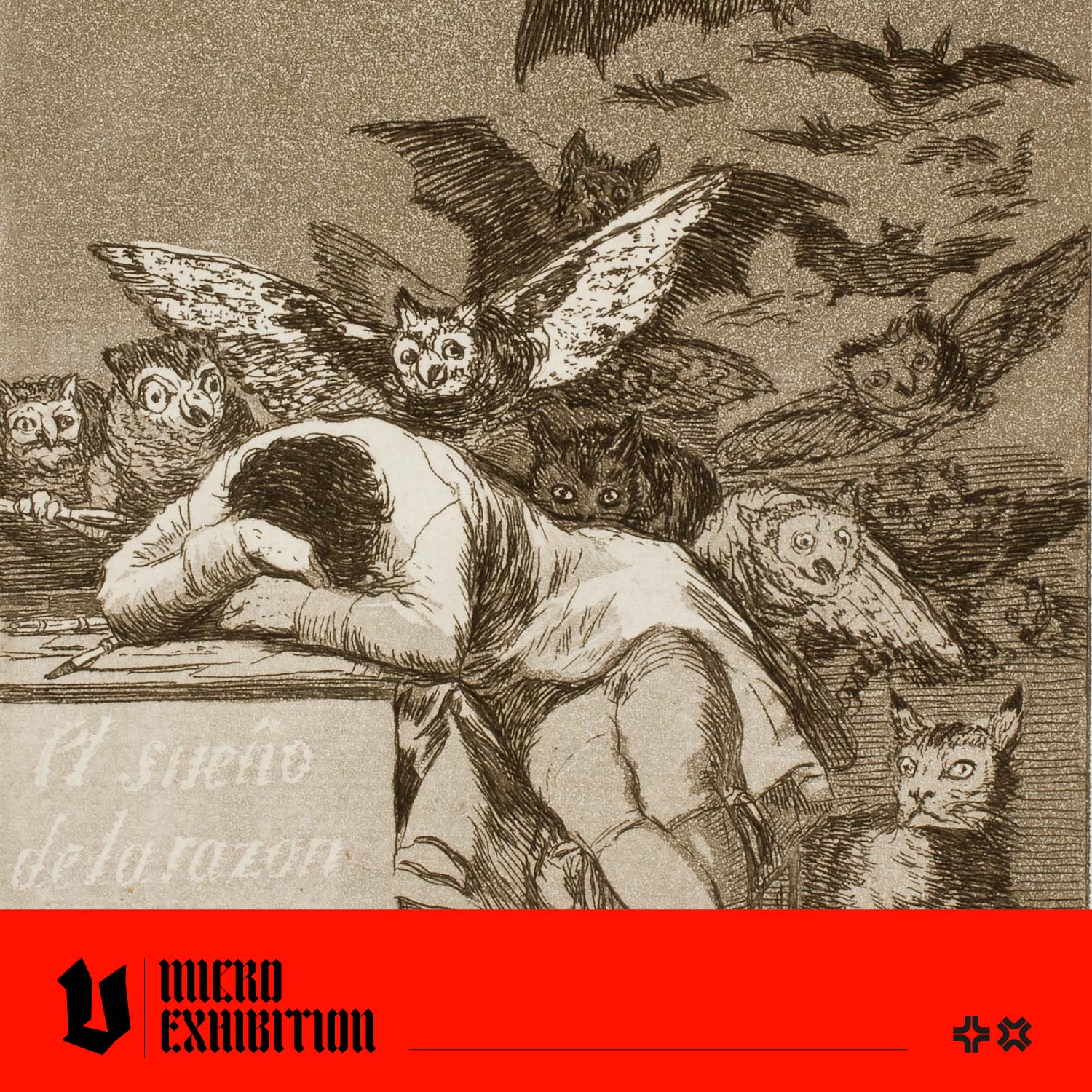
Goya also recorded the conflict in a series of prints known as The Disasters of War. These stark images show brutality and deprivation without offering an easy distinction between hero and villain. Together, the prints and paintings make Goya one of the most powerful artistic witnesses to the realities of war.
The Black Paintings
In his later years, Goya created a group of dark, unsettling works known as the Black Paintings. Painted directly onto the walls of his house outside Madrid, they include Saturn Devouring His Son and Witches’ Sabbath. Their sombre colours, distorted figures and disturbing subjects contrast sharply with the cheerful tapestry designs of his early career.
The paintings were not made for public display, and their precise meanings are open to interpretation. They can be understood as reflections on fear, violence, superstition and the darker sides of human nature. Today, they are among Goya’s most recognised works and are held at the Museo del Prado in Madrid.
Why Goya’s paintings still matter
Goya’s art bridges the eighteenth and nineteenth centuries, combining the traditions of court painting with a bold, personal vision. He could observe people with warmth and humour, but he could also depict cruelty and despair with unflinching force. His loose brushwork and dramatic use of light helped open new possibilities for painting, while his willingness to confront difficult subjects continues to resonate.
From The Parasol to The Third of May 1808 and the Black Paintings, Goya’s work offers more than a survey of Spanish history. It is an exploration of power, belief, conflict and the human condition—one that remains compelling to viewers today.
Francisco Goya’s Paintings: 7 Frequently Asked Questions
- What are Francisco Goya’s most famous paintings?
- Where can I see Francisco Goya’s paintings?
- What is the story behind The Third of May 1808?
- What are the Black Paintings, and why did Goya create them?
- What is the meaning of Saturn Devouring His Son?
- What techniques and materials did Goya use in his paintings?
- How did Francisco Goya influence modern art?
What are Francisco Goya’s most famous paintings?
Francisco Goya’s most famous paintings include The Third of May 1808, a moving depiction of wartime executions, and Charles IV of Spain and His Family, his celebrated royal portrait. Other widely recognised works are The Nude Maja and The Clothed Maja, as well as Saturn Devouring His Son, one of his unsettling Black Paintings. Together, these works showcase Goya’s remarkable range, from formal portraiture to powerful and disturbing explorations of human experience.
Where can I see Francisco Goya’s paintings?
Many of Francisco Goya’s best-known paintings can be seen at the Museo del Prado in Madrid, including the Black Paintings and The Third of May 1808. His works are also held in museums around the world, such as the National Gallery in London, the Louvre in Paris and the Metropolitan Museum of Art in New York. Check each museum’s website before visiting, as displays can change.
What is the story behind The Third of May 1808?
Goya’s The Third of May 1808 depicts the French army’s execution of Spanish civilians in Madrid, following an uprising against the occupation on 2 May. The painting focuses on the moment before the shooting: a man in a white shirt faces the soldiers, his arms outstretched, while others wait in terror or lie dead. Goya painted it in 1814, after the conflict, to commemorate the Spanish resistance. Rather than glorifying battle, he emphasises the fear and brutality of the reprisals, making the work a powerful statement about the human cost of war.
What are the Black Paintings, and why did Goya create them?
Goya’s Black Paintings are a group of 14 dark, unsettling works he painted directly onto the walls of his home near Madrid between about 1819 and 1823. They include Saturn Devouring His Son and Witches’ Sabbath, and explore themes such as fear, violence, superstition and death. Goya never explained their meaning, so his reasons remain uncertain; they may reflect his declining health, personal anxieties and disillusionment with the political and social climate of Spain. As they were painted for his private home rather than public display, they offer a strikingly personal and enigmatic view of his later years.
What is the meaning of Saturn Devouring His Son?
Francisco Goya’s Saturn Devouring His Son is often interpreted as a terrifying image of fear, violence and the destructive force of power. It draws on the classical myth of Saturn, who swallowed his children to prevent them from overthrowing him, but Goya’s raw, shadowy depiction makes the subject feel intensely human and unsettling. Painted directly onto the walls of his home as part of the Black Paintings, it may also reflect the artist’s anxieties about ageing, death and the turbulent world around him. Its exact meaning remains uncertain, and that ambiguity is part of what makes the painting so compelling.
What techniques and materials did Goya use in his paintings?
Goya worked in a range of media, including oil paint on canvas and, particularly in his early career, fresco for large-scale decorative commissions. He also produced tapestry cartoons, using oil on canvas as designs for woven works. His technique changed over time: early paintings often feature clear outlines, carefully modelled figures and a brighter palette, while later works use looser, more expressive brushwork, strong contrasts of light and shade, and darker colours. In the Black Paintings, he applied oil paint directly to the plaster walls of his house. Outside painting, Goya also made influential prints using etching, aquatint and related techniques.
How did Francisco Goya influence modern art?
Francisco Goya influenced modern art through his bold experimentation with composition, expressive brushwork and unflinching treatment of difficult subjects. Rather than idealising his sitters or turning war into heroic spectacle, he explored psychological tension, political violence and the darker sides of human nature. His *Black Paintings*, with their distorted forms and unsettling imagery, anticipated aspects of Expressionism and Surrealism, while works such as *The Third of May 1808* helped shape later artists’ depictions of conflict. Goya’s willingness to challenge artistic conventions and respond to the realities of his time helped establish him as a forerunner of modern painting.