
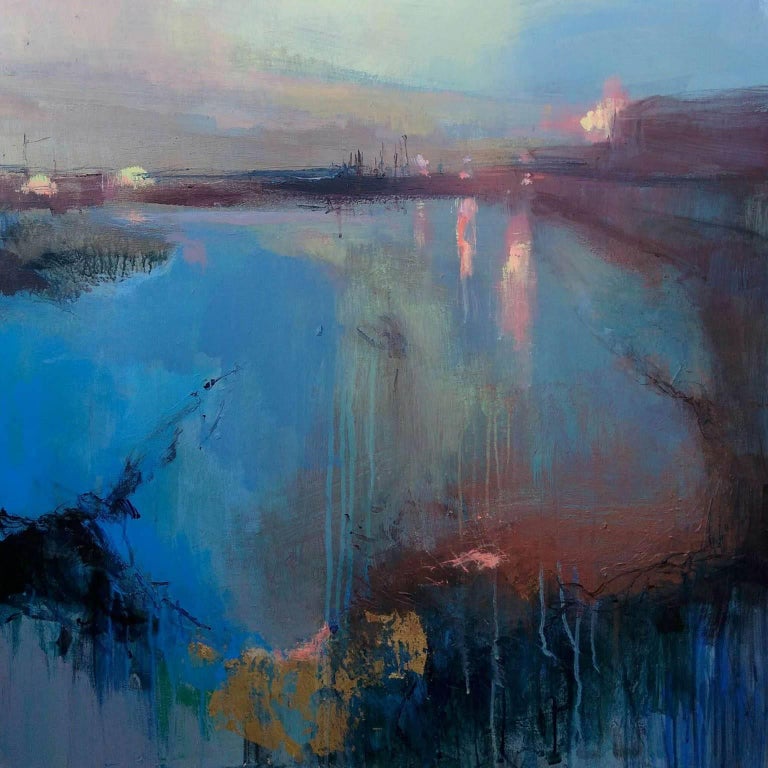
Abstract Landscape Painting: Capturing the Feeling of a Place
Abstract landscape painting offers a fresh way to experience the natural world. Rather than describing every tree, hill or cloud in realistic detail, it uses colour, shape, texture and gesture to convey the character of a place. A painting might suggest a windswept coastline, a quiet field or a distant mountain range without showing any of them literally.
What makes a landscape abstract?
In a traditional landscape painting, recognisable features often guide the viewer through the scene. In an abstract landscape, those features may be simplified, distorted or reduced to basic forms. A horizon could be a single line of colour; a river might appear as a sweeping mark; and a sky could be built from layered blocks or washes of paint.
Abstraction does not necessarily mean that a painting has no connection to a real place. Many artists begin with a particular landscape, memory or observation, then transform it through their own visual language. The finished work may capture less of what a place looks like and more of how it feels.
Colour, mood and atmosphere
Colour plays a central role in shaping the mood of an abstract landscape. Muted greens, greys and blues can suggest mist, rain or stillness, while vivid reds and golds may evoke warmth, evening light or a more emotional response to the scene. Unexpected colour choices can also encourage viewers to look beyond familiar ideas of what a landscape should be.
The balance between colours matters too. A broad, quiet area may give the eye space to rest, while a concentrated patch of bright colour can draw attention to a focal point. Through these choices, an artist can create a sense of distance, movement, calm or tension.
Texture and mark-making
Surface and texture bring another layer of meaning to abstract landscape painting. Thin washes can create a feeling of openness or atmosphere, while thick paint and rough marks may suggest rock, earth or turbulent weather. Scraping, layering and leaving parts of the canvas exposed can make the painting feel spontaneous and alive.
Different tools produce different effects. Brushes allow for controlled lines and broad strokes, while palette knives can build bold areas of paint. Some artists use a combination of methods, letting one layer show through another to create depth and complexity.
Composition without strict realism
Even when a scene is highly abstract, its composition can still guide the viewer’s eye. A strong horizontal division may suggest land meeting sky. Diagonal forms can create energy, while repeated shapes can bring rhythm and unity to the image. Scale and spacing also help establish a sense of depth, even when the forms are not immediately recognisable.
These visual cues give viewers something to respond to without dictating exactly what they should see. One person may recognise a shoreline, while another may be drawn to the painting’s movement or colour relationships. That openness is part of the appeal.
How to look at an abstract landscape
There is no single correct way to interpret an abstract landscape. Start by noticing your first response: does the painting feel calm, dramatic, expansive or enclosed? Then look at how the artist has used colour, texture, shape and space to create that impression. You might find yourself recognising a place, recalling a memory or simply enjoying the arrangement of marks.
Abstract landscape painting keeps the natural world at its heart while allowing room for imagination. By moving beyond literal description, it can make familiar surroundings feel new again—and invite each viewer to find their own landscape within the work.
Abstract Landscape Painting: Five Frequently Asked Questions
- How do you paint an abstract landscape step by step?
- What makes a landscape abstract?
- What are the 5 elements of abstract art?
- Can a landscape painting be abstract?
- Can you mix abstract art with landscape?
How do you paint an abstract landscape step by step?
To paint an abstract landscape, begin by choosing a place, photograph or memory as inspiration, then decide on a simple colour palette to set the mood. Lightly sketch the main shapes—such as the horizon, hills or water—without adding realistic detail. Block in the largest areas of colour first, working from the background towards the foreground, and let the paint dry if you want to build up distinct layers. Add texture and movement with varied brushstrokes, a palette knife or diluted washes, then simplify or adjust any areas that feel too busy. Finally, step back and consider the balance of colour, shape and space; add a few final marks where needed, while leaving room for the viewer’s imagination.
What makes a landscape abstract?
A landscape is considered abstract when it moves away from depicting a place in precise, realistic detail and instead uses colour, shape, texture and mark-making to suggest its character. The horizon, hills, sea or sky might be simplified, distorted or reduced to broad forms, allowing the artist to capture a mood, memory or feeling rather than an exact view. Some abstract landscapes remain recognisable, while others leave more room for the viewer’s imagination.
What are the 5 elements of abstract art?
The five elements often used to discuss abstract art are line, shape, colour, texture and space. In an abstract landscape, lines can suggest a horizon or movement, shapes may evoke hills or water, and colour helps establish mood and atmosphere. Texture adds a sense of surface, while the use of space—through the arrangement of forms and areas of colour—creates balance, depth or openness. Artists may use different lists, but these elements offer a useful starting point for looking at an abstract painting.
Can a landscape painting be abstract?
Yes, a landscape painting can be abstract. Rather than depicting a place in realistic detail, an abstract landscape uses elements such as colour, shape, texture and brushwork to suggest its mood or atmosphere. It may still be inspired by a recognisable setting, such as a coastline or hillside, but leaves room for the artist’s interpretation—and the viewer’s imagination.
Can you mix abstract art with landscape?
Yes, abstract art and landscape can work beautifully together. An abstract landscape may retain recognisable elements, such as a horizon, mountains or coastline, while simplifying or reshaping them through expressive colour, texture and mark-making. The result can capture the mood and movement of a place rather than depict it in exact detail. You can make the scene as subtle or as abstract as you like, balancing familiar forms with your own creative interpretation.