
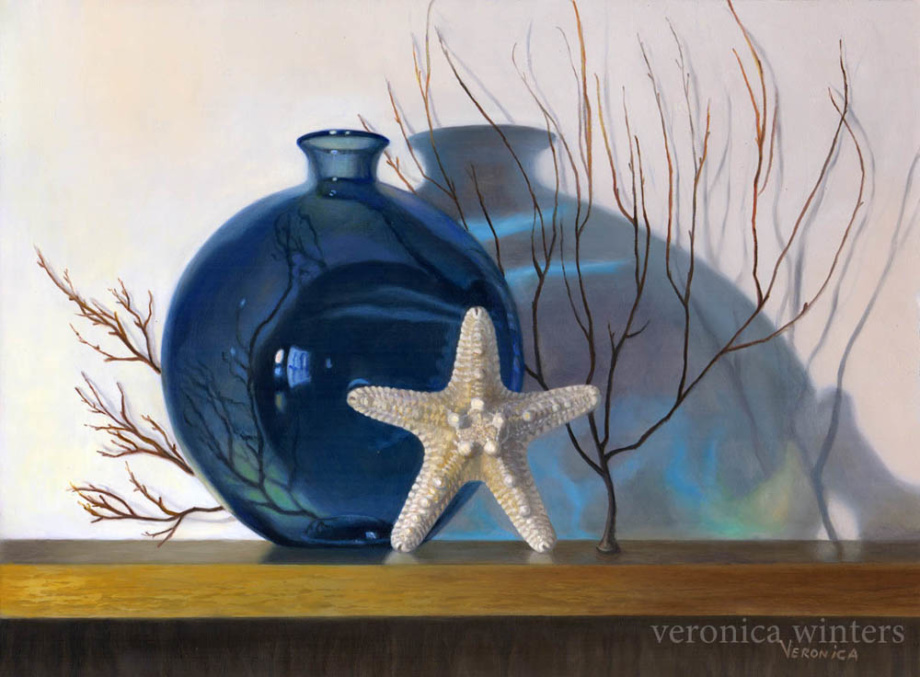
Realistic Painting: Seeing the World in Detail
Realistic painting aims to represent people, places and objects in a recognisable, convincing way. Rather than simplifying a subject or departing from its appearance, the artist observes its forms, colours, textures and light, then works to recreate them on a flat surface. The result can feel almost like a window onto the world—but realism is more than simply copying what is seen.
What makes a painting realistic?
A realistic painting often depends on careful observation and an understanding of how objects occupy space. Artists use proportion, perspective, tone and colour to create a sense of depth and physical presence. Subtle shifts in light can suggest the curve of a face, the weight of fabric or the texture of a weathered wall.
Accuracy does not mean that every detail must be included. A painter may choose to emphasise certain features, soften others or adjust the composition to guide the viewer’s attention. Even highly lifelike work reflects the artist’s decisions about what to show and how to show it.
A tradition of observation
Realistic approaches to painting have appeared in many cultures and periods. Advances in materials and techniques have allowed artists to study the natural world in increasingly precise ways, while photography has provided both a source of reference and a challenge to painters. Realism has never stood still: artists continue to reinterpret it in response to changing ideas, technologies and ways of seeing.
Today, realistic painting can range from traditional portraiture and still life to contemporary scenes of everyday life. Some artists pursue an exceptionally detailed finish, while others use looser brushwork but retain convincing form and light. Realism is therefore not a single style, but a broad approach to representing the visible world.
The skills behind the image
Learning to paint realistically begins with looking closely. Artists study the relationships between shapes, the direction of light and the differences between highlights, mid-tones and shadows. They may practise drawing from life, work with photographs or make studies of particular subjects before beginning a finished painting.
Colour is another essential part of the process. A surface rarely appears to be one flat colour: it may contain reflected light, warm and cool shifts, and subtle changes caused by its surroundings. Observing these variations helps a painting feel more natural and gives it atmosphere.
Materials also influence the result. Oils can be blended gradually and layered over time; acrylics dry more quickly and can be used in a variety of ways; watercolours often preserve a sense of transparency and spontaneity. Each medium offers different possibilities for creating texture, detail and depth.
More than imitation
The appeal of realistic painting lies partly in its recognisable subjects, but its meaning can extend beyond appearance. A portrait may suggest character or mood through a gesture, expression or carefully chosen setting. A still life can draw attention to the beauty of ordinary objects, while a landscape may convey a particular sense of weather, place or memory.
Realism can also encourage us to look again at familiar surroundings. Details that might otherwise go unnoticed—the reflection on glass, the softness of worn cloth or the changing colour of an evening sky—become worthy of attention. In this way, a realistic painting can be both an image of the world and an invitation to observe it more closely.
Why realistic painting still matters
In an age of digital images, realistic painting offers a distinctive kind of attention. Each mark is made by hand, and the finished work carries traces of the time, choices and skill involved in its creation. The subject may be familiar, but the painter’s interpretation gives it a particular presence.
Whether highly detailed or quietly expressive, realistic painting continues to connect viewers with the people and places around them. Its lasting strength lies not only in how closely it resembles life, but in the care with which it asks us to see.
8 Tips for More Realistic Painting
- Observe carefully before you paint.
- Compare shapes, not objects.
- Match values before fine details.
- Use a limited, balanced palette.
- Paint shadows with reflected colour.
- Soften edges where forms turn away.
- Keep sharp edges for focal points.
- Step back often to check proportions.
Observe carefully before you paint.
Before you begin painting, take time to observe your subject carefully. Notice how its shapes fit together, where the light falls and how shadows alter its colours and contours. Look beyond the obvious features to small details, such as reflections, textures and subtle changes in tone. Making a few quick sketches or notes can help you understand these relationships before you start. The more closely you look, the more convincing and lifelike your painting is likely to feel.
Compare shapes, not objects.
When painting realistically, try comparing shapes rather than naming the objects you see. Instead of thinking “this is an eye” or “that is a cup”, notice the angles, curves and spaces between them. Look at how one shape sits in relation to another, and compare their widths, heights and positions. This helps you judge proportions more accurately and avoid relying on what you think an object should look like. By focusing on visible shapes, you can build a more convincing image, one careful observation at a time.
Match values before fine details.
Before adding fine details, make sure the light and dark values in your painting are working. Squint at your subject or reference to simplify it into broad areas of light, mid-tone and shadow, then compare these shapes with your painting. Getting the values right first creates convincing form, depth and contrast; details added too early can’t compensate for a structure that feels flat or unclear.
Use a limited, balanced palette.
Use a limited, balanced palette by choosing a small group of colours that work well together, rather than reaching for every pigment. This helps create harmony across the painting and makes it easier to mix convincing variations in light, shadow and skin tone. Include a range of warm and cool colours, and consider how each colour is affected by the light and its surroundings. With fewer pigments to manage, you can focus more closely on subtle shifts in tone and colour—the details that help a realistic painting feel cohesive and lifelike.
Paint shadows with reflected colour.
Shadows are rarely just black or grey: they often pick up colour reflected from nearby surfaces. When painting a shadow, look for subtle hues from the surrounding environment—a warm glow from a wooden floor or a cool tint from a blue wall—and mix them into the shadow colour. These reflected tones help the shadow feel connected to its setting, adding depth and making the painting more convincing.
Soften edges where forms turn away.
Soften edges where forms turn away from the light or recede into shadow to make them feel rounded and natural. A sharp edge attracts attention, while a softer transition suggests that one surface is gradually turning away from the viewer. Compare the edges across your subject, keeping the clearest, hardest ones where you want the focus and gently blending others to create depth and form.
Keep sharp edges for focal points.
Use sharp, clearly defined edges to draw attention to the focal points in a realistic painting. A crisp outline around a face, key object or important detail can make it stand out, while softer edges elsewhere help create depth and keep the composition from feeling too harsh. Observe where edges appear sharp in your subject, and use them selectively to guide the viewer’s eye.
Step back often to check proportions.
Step back from your painting regularly to see it with fresh eyes. Up close, it is easy to focus on individual details and miss proportions that feel slightly off; viewing the whole image from a distance makes it easier to compare shapes, spacing and balance. If something looks wrong, adjust it before adding more detail.