
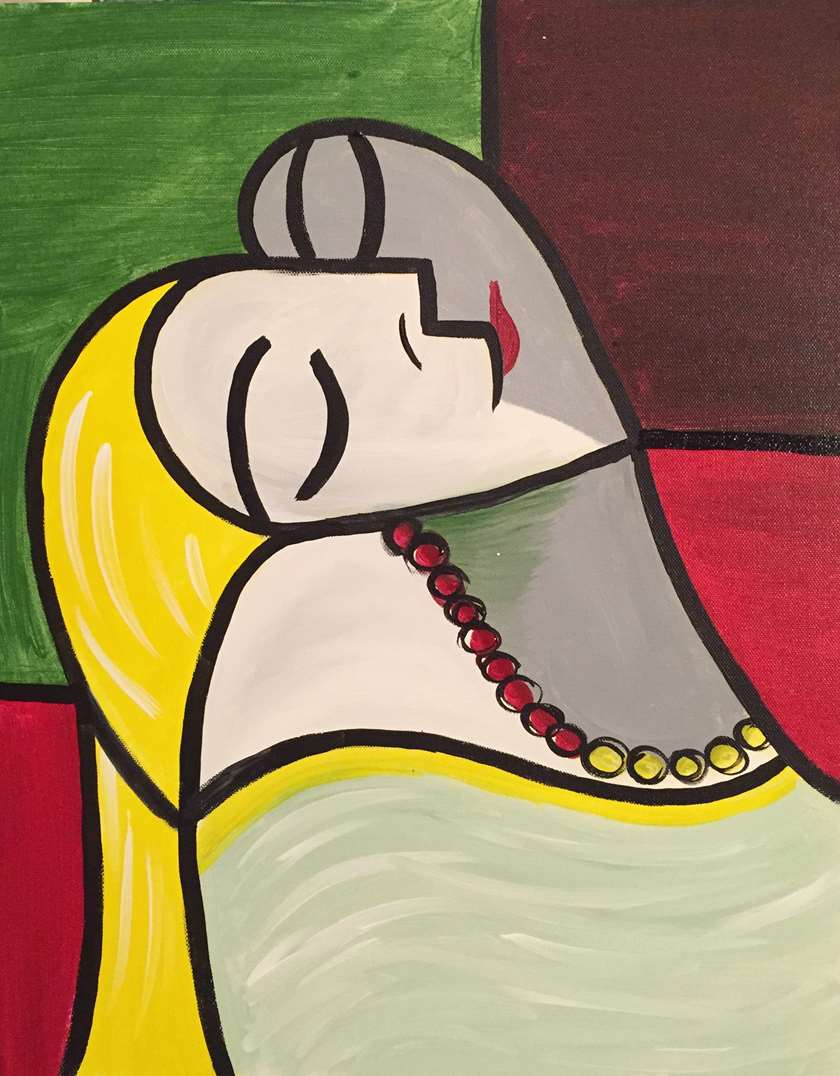
Picasso’s Famous Paintings: A Guide to His Most Iconic Works
Pablo Picasso was one of the most influential artists of the 20th century. Over a career spanning more than seven decades, he moved between styles, subjects and materials, continually reinventing his art. From the melancholy figures of his Blue Period to the fractured forms of Cubism and the stark anti-war message of Guernica, Picasso’s paintings remain instantly recognisable and widely discussed.
Here are some of his best-known works, and the stories behind them.
The Old Guitarist (1903–04)
Painted during Picasso’s Blue Period, The Old Guitarist shows a thin, blind musician hunched over his instrument. The painting’s restricted palette of blues and blue-greens reinforces its mood of hardship and isolation. The guitar, picked out in warmer tones, provides a striking contrast and seems to offer the figure a source of comfort. The work is held at the Art Institute of Chicago.
La Vie (1903)
La Vie is another major painting from the Blue Period. It depicts a naked couple facing a woman holding a baby, with a second, apparently grieving figure visible in the background. Its symbolism has prompted much debate, and the painting is often linked to Picasso’s personal experiences and reflections on life, loss and artistic ambition. It is part of the collection of the Cleveland Museum of Art.
Family of Saltimbanques (1905)
As Picasso moved into his Rose Period, his palette became warmer, with pinks, ochres and earthy tones replacing many of the earlier blues. In Family of Saltimbanques, a group of circus performers stand together in an open landscape. Although they appear as a company, the figures seem emotionally separate, lending the scene a quiet, reflective quality. The painting is in the National Gallery of Art in Washington, DC.
Les Demoiselles d’Avignon (1907)
Often regarded as a landmark in the development of modern art, Les Demoiselles d’Avignon depicts five women in a brothel in Barcelona. Picasso breaks with traditional perspective, presenting the figures through sharp, angular forms and deliberately disrupted viewpoints. The painting’s challenging appearance helped prepare the way for Cubism. It is held by the Museum of Modern Art in New York.
Three Musicians (1921)
In Three Musicians, Picasso uses the fragmented shapes of Synthetic Cubism to form three performers: a clarinettist, a guitarist and a singer holding music. Their bodies and instruments are assembled from bold, flat areas of colour, like pieces of cut paper. The composition is both playful and carefully structured. A version of the painting is in the Museum of Modern Art in New York.
Girl before a Mirror (1932)
This vivid portrait shows Picasso’s companion Marie-Thérèse Walter standing before a mirror. The figure and her reflection are rendered in contrasting colours and patterns, suggesting that the mirror reveals more than a simple likeness. The painting is often interpreted as an exploration of identity, beauty and the passage of time. It is also held at the Museum of Modern Art in New York.
Guernica (1937)
One of Picasso’s most famous paintings, Guernica was created in response to the bombing of the Basque town of Guernica during the Spanish Civil War. Its monumental, monochrome composition shows people and animals caught in anguish and chaos. Rather than depicting the attack as a literal scene, Picasso conveys its horror through distorted figures, stark contrasts and powerful symbols. The painting is displayed at the Museo Reina Sofía in Madrid.
The Weeping Woman (1937)
Painted in the same year as Guernica, The Weeping Woman turns grief into a forceful portrait. The woman’s face is broken into angular shapes, while bright colours make the image feel both vivid and unsettling. The painting is often associated with the suffering depicted in Guernica and forms part of Picasso’s wider response to the Spanish Civil War. A version is held at Tate in London.
A changing vision
Picasso’s famous paintings are not defined by a single style. They reveal an artist who repeatedly challenged the conventions of painting, moving from the emotional restraint of the Blue Period to the radical experiments of Cubism and the political urgency of his later work. Exploring these paintings together offers a glimpse of both Picasso’s changing artistic vision and the turbulent world in which he lived.
Picasso’s Most Famous Paintings: Five Frequently Asked Questions
- What is Picasso most popular painting?
- What is the #1 most famous painting in the world?
- Did Picasso paint the Mona Lisa?
- How much is Picasso painting worth?
- Where are Picassos most famous paintings?
What is Picasso most popular painting?
Picasso’s most popular and widely recognised painting is often considered to be Guernica (1937). Created in response to the bombing of the Basque town during the Spanish Civil War, this monumental black-and-white work conveys the suffering of war through fractured figures and intense expressions. Other paintings, including Les Demoiselles d’Avignon, are also among his best-known works, so the answer can vary depending on whether popularity means public recognition, artistic influence or visitor numbers.
What is the #1 most famous painting in the world?
The painting most often described as the world’s most famous is Leonardo da Vinci’s Mona Lisa, renowned for its enigmatic smile and displayed at the Louvre in Paris. It is not a work by Picasso; among Picasso’s own paintings, Guernica is often considered his best-known, celebrated for its powerful response to the horrors of war.
Did Picasso paint the Mona Lisa?
No, Pablo Picasso did not paint the Mona Lisa—it was created by Leonardo da Vinci in the early 16th century. Picasso did, however, become connected with the painting after it was stolen from the Louvre in 1911. He was questioned by the police because he had previously bought sculptures that were later found to have been stolen from the museum, but he was not responsible for the theft.
How much is Picasso painting worth?
The value of a Picasso painting can range from thousands of pounds for a small or less well-known work to many millions for a major, authenticated painting. Its price depends on factors such as the period, subject, size, medium, condition and provenance, as well as current demand. Picasso’s Les Femmes d’Alger (Version “O”) sold for US$179.4 million at auction in 2015, but this exceptional result is not a guide to the value of every work. A reliable valuation requires an expert assessment and verification of authenticity and ownership history.
Where are Picassos most famous paintings?
Picasso’s most famous paintings are displayed in museums around the world. Guernica is at the Museo Reina Sofía in Madrid, while Les Demoiselles d’Avignon and Girl before a Mirror are at the Museum of Modern Art in New York. The Old Guitarist can be seen at the Art Institute of Chicago, and The Weeping Woman is held by Tate in London. As collections and exhibitions can change, check each museum’s website before planning a visit.