
Jean-Michel Basquiat Paintings: Art, Ideas and Legacy
Jean-Michel Basquiat’s paintings are instantly recognisable for their urgent energy, vivid colours and layered imagery. Combining words, symbols, figures and fragments of history, his work challenges viewers to look beyond the surface. Although Basquiat’s career was brief, his paintings became some of the most influential works of late twentieth-century art.
Who was Jean-Michel Basquiat?
Jean-Michel Basquiat was born in Brooklyn, New York, in 1960. He first attracted attention in the late 1970s through graffiti made with the artist Al Diaz under the name SAMO. By the early 1980s, Basquiat was exhibiting in galleries and had become a prominent figure in New York’s contemporary art scene.
His paintings developed alongside a city alive with music, street culture and new forms of artistic expression. Basquiat worked across drawing, painting and mixed media, often using found materials and incorporating writing directly into his compositions. He died in 1988, aged 27, but his work continues to be exhibited and discussed around the world.
A distinctive visual language
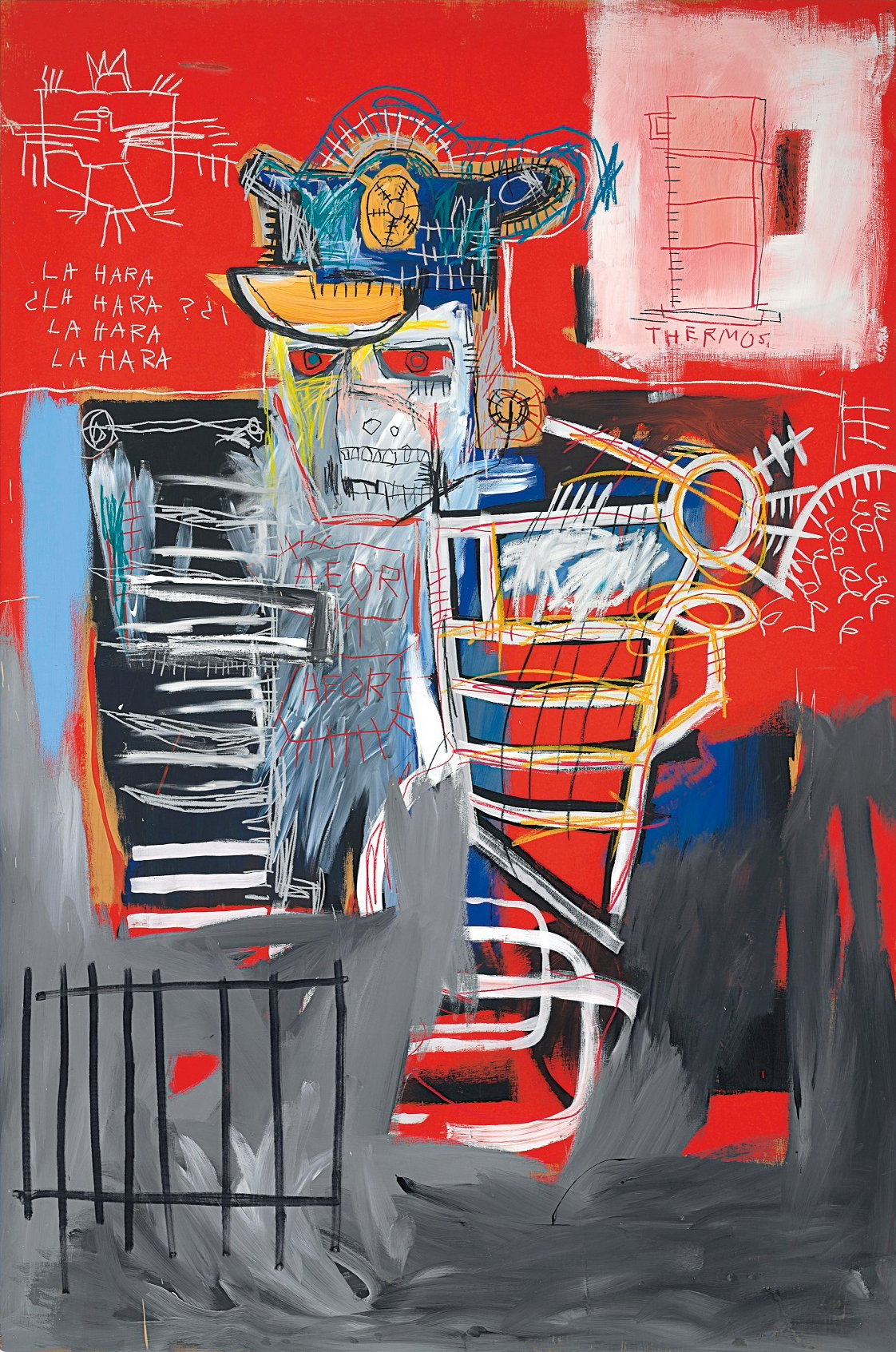
Basquiat’s paintings often bring together bold, seemingly spontaneous marks with carefully chosen references. Crowns, skulls, masks, anatomical diagrams, words and repeated symbols appear throughout his work. These elements can feel playful or raw, but they also invite closer attention to questions of identity, power, race, wealth and history.
His compositions frequently combine text and image. Words may be crossed out, repeated or placed beside drawings, encouraging the viewer to consider how language shapes meaning. The result is not a simple illustration of an idea, but a visual conversation in which different details compete for attention.
History, identity and social commentary
Many of Basquiat’s paintings engage with histories that have been overlooked or marginalised. He drew on African and Caribbean references, jazz, sport, popular culture, anatomy and the history of art. His work also examines how Black people are represented, celebrated and exploited within society.
Basquiat’s frequent use of crowns is among his best-known motifs. The crown can suggest dignity, achievement or recognition, while also raising questions about who is granted status and whose contributions are ignored. Like many of his symbols, its meaning can shift from one painting to another.
Important works and recurring motifs
Several paintings offer a glimpse into the range of Basquiat’s practice. Untitled (Skull) (1981), for example, presents a striking head-like image built from energetic lines and areas of colour. Its powerful, unsettled appearance reflects Basquiat’s ability to combine expressive mark-making with imagery that feels both personal and universal.
Boy and Dog in a Johnnypump (1982) is a large, dynamic painting featuring a child and a dog amid vivid, fragmented forms. Hollywood Africans (1983) addresses stereotypes and the limited roles available to Black performers in popular entertainment. Together, these works show how Basquiat moved between intense visual expression and pointed social observation.
Materials and technique
Basquiat’s paintings can appear immediate and unfiltered, yet their complexity comes from the accumulation of decisions. He worked with acrylic, oilstick and other materials, sometimes painting on surfaces such as wood or canvas. Layers of marks, words and images create a sense of movement, as if the work is being revised or argued with as it develops.
This approach helped distinguish Basquiat from more traditional ideas of polished painting. His work draws on the visual freedom of graffiti and drawing, while engaging with the scale and ambition of modern painting. The tension between apparent spontaneity and carefully assembled references is a central part of its appeal.
Basquiat’s influence
Basquiat helped change perceptions of what contemporary painting could be and whose stories it could tell. His work connected street culture with the gallery world without losing its sense of urgency. Artists, musicians, designers and writers continue to find inspiration in his use of text, symbols and personal imagery.
Interest in Basquiat’s paintings remains strong, but their significance goes beyond their market value. They reward repeated viewing: a single image may bring together humour, anger, beauty and historical reference. Their energy can be immediate, while their meanings remain open to interpretation.
Why Basquiat’s paintings still matter
Jean-Michel Basquiat’s paintings remain compelling because they refuse to settle into one meaning. They are visually bold, emotionally direct and rich with cultural references. By placing personal expression alongside questions of history and power, Basquiat created work that continues to speak to new generations of viewers.
Exploring Jean-Michel Basquiat: Frequently Asked Questions on Value, Ownership, and Legacy
- How much is a Basquiat painting worth?
- Does Jay Z own Basquiat paintings?
- What is Basquiat’s most famous piece?
- Who owns the most expensive Basquiat?
- What caused Basquiat’s death?
- Why is Basquiat so famous?
- Who bought Basquiat $110 million?
- How much does a Basquiat painting cost?
- What is Jean-Michel Basquiat’s iconic painting?
How much is a Basquiat painting worth?
The value of a Jean-Michel Basquiat painting depends on factors such as its date, size, subject, condition and provenance. Major works have sold for tens of millions of pounds; his 1982 painting Untitled sold for US$110.5 million at auction in 2017. That figure is exceptional, however, and should not be taken as a guide to the value of every work attributed to Basquiat. For an estimate, consult a reputable auction house or art specialist, who can assess the work’s authenticity and documentation.
Does Jay Z own Basquiat paintings?
Yes. Jay-Z is widely reported to own Jean-Michel Basquiat’s 1982 painting Mecca, which has been associated with his art collection. As ownership details for privately held works are not always publicly verified, it is best to treat reports about specific paintings and purchases with some caution.
What is Basquiat’s most famous piece?
Basquiat’s best-known painting is often considered to be Untitled (1982), a vivid, large-scale image of a skull-like head. It is also one of his most valuable works: in 2017, it sold at auction for US$110.5 million, then a record price for an American artist’s work. Basquiat created many other celebrated paintings, so “most famous” can depend on whether the focus is public recognition, critical influence or auction history.
Who owns the most expensive Basquiat?
The most expensive Jean-Michel Basquiat painting sold at auction is Untitled (1982), the vivid skull painting bought by Japanese entrepreneur Yusaku Maezawa for US$110.5 million at Sotheby’s in 2017. Maezawa later offered the work for sale, but it was withdrawn from auction; public reports have not clearly confirmed a subsequent change of ownership.
What caused Basquiat’s death?
Jean-Michel Basquiat died in 1988, aged 27, from an accidental heroin overdose. His death was a tragic loss, cutting short the career of an artist whose paintings continue to have a profound influence on contemporary art.
Why is Basquiat so famous?
Jean-Michel Basquiat is famous for his striking, expressive paintings, which combine bold colours, energetic marks, words and recurring symbols such as crowns and skulls. Emerging from New York’s graffiti scene in the late 1970s, he went on to become a leading artist of the 1980s. His work draws on Black history, popular culture and personal experience to explore identity, race and power, giving it a lasting influence well beyond the art world.
Who bought Basquiat $110 million?
Jean-Michel Basquiat’s 1982 painting Untitled, depicting a skull, sold for US$110.5 million at Sotheby’s in New York in 2017. The buyer was Japanese entrepreneur and art collector Yusaku Maezawa, founder of the online fashion retailer Zozotown. The price, including fees, set an auction record for a work by an American artist at the time.
How much does a Basquiat painting cost?
The price of a Jean-Michel Basquiat painting varies widely according to its size, date, subject, condition and provenance. Major paintings have sold for tens of millions of pounds, with his 1982 work Untitled setting an auction record of US$110.5 million in 2017. Smaller works on paper and prints can cost considerably less, though prices still depend on the individual piece and whether it is an original or an authorised edition. For an accurate valuation, consult a reputable auction house or art specialist, and check the work’s provenance and authenticity.
What is Jean-Michel Basquiat’s iconic painting?
There is no single definitive answer, but Jean-Michel Basquiat’s 1982 painting Untitled, often known as Skull, is among his most iconic works. Its vivid colours, expressive skull-like face and energetic, layered brushwork capture the raw intensity of his style. The painting is also famous for its record-breaking sale in 2017, which helped bring Basquiat’s work to an even wider audience.