
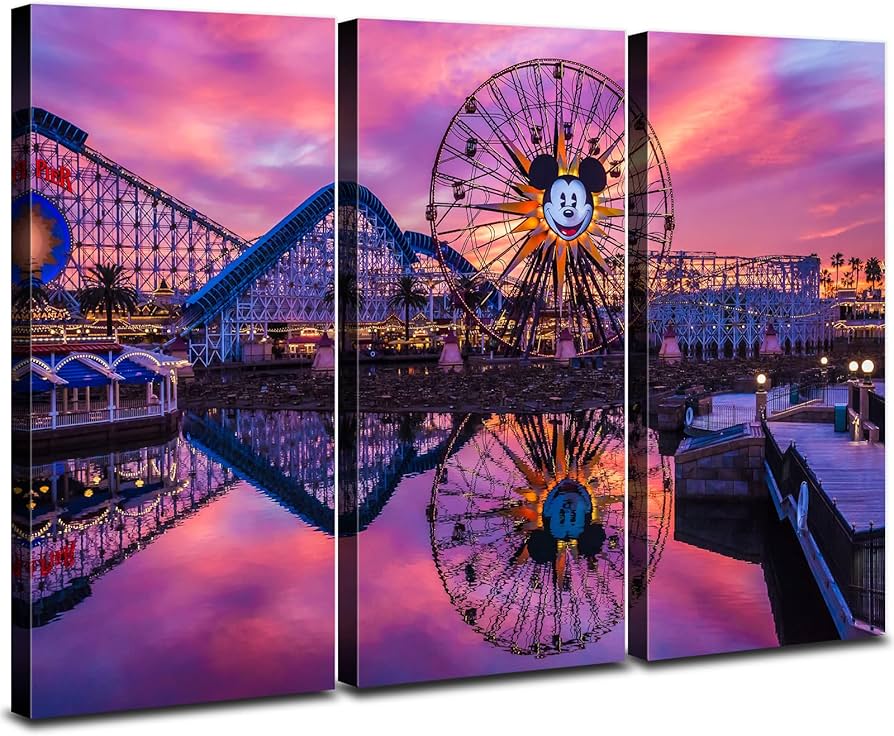
Disney Paintings: Bringing Beloved Stories to Life
Disney paintings capture the colour, imagination and emotion of some of the world’s best-loved stories. From enchanted castles and underwater kingdoms to expressive character portraits, these artworks offer a fresh way to enjoy familiar worlds beyond the screen.
A tradition of visual storytelling
Art has always played a central role in Disney’s storytelling. Long before a finished animated film reaches cinemas, artists develop characters, settings and moods through drawings, paintings and other forms of visual development. Background paintings, in particular, help establish the atmosphere of a scene, using colour, light and detail to make imaginary places feel vivid and believable.
This emphasis on visual storytelling continues to inspire artists today. Some paintings recreate memorable moments from animated films, while others reinterpret characters and settings in a personal style. The results can range from soft watercolour scenes to bold, contemporary portraits.
Different styles and subjects
Disney-inspired paintings come in many forms. A piece might focus on a single character, depict a recognisable landscape or bring several figures together in a carefully composed scene. Artists may work in oils, acrylics, watercolours or digital media, each offering a different effect. Watercolour can lend a delicate, storybook quality, while acrylics often allow for brighter colours and sharper contrast.
Some works stay close to the look of the original films; others take a more imaginative approach. An artist might use abstract shapes, unusual colour palettes or a vintage-inspired finish to create something distinctive. The appeal lies in seeing a familiar story through a new artistic lens.
Choosing a painting for your home
When selecting a Disney painting, consider the room, the scale of the artwork and the mood you want to create. A small character portrait can add a playful touch to a reading nook, while a larger scene may become the focal point of a living room or bedroom. Colours that complement your existing décor can help the piece feel at home, although a striking contrast can make it stand out.
Framing also affects the final look. A simple frame can keep attention on the artwork, while a more decorative option may suit a nostalgic or fairytale-inspired interior. If you are buying an original or limited-edition work, check the artist’s details, the materials used and any information about authenticity or provenance.
Original, licensed and fan-created art
It is useful to understand the difference between officially licensed artwork and fan-created work. Licensed pieces are authorised for sale by the relevant rights holders. Fan art is made independently and may draw on protected characters or settings. Artists and sellers should be clear about what they are offering, and buyers should check product descriptions carefully.
Copyright and trade mark rules can apply to characters, film imagery and other elements of Disney properties. Anyone planning to reproduce or sell artwork based on these properties should seek appropriate permission and take professional legal advice where necessary.
A lasting source of inspiration
For many people, Disney paintings connect art with treasured memories. They can recall a favourite film, a character from childhood or the excitement of discovering an imagined world for the first time. Whether displayed as a personal keepsake or chosen for its colour and composition, a well-made painting can celebrate the enduring appeal of animated storytelling.
From classic scenes to contemporary interpretations, Disney-inspired artwork continues to bring imagination into everyday spaces—one painted story at a time.
Top 5 Tips for Creating Enchanting Disney-Inspired Paintings
- Sketch the character lightly before painting.
- Use bright colours to capture Disney’s playful style.
- Layer thin washes for smooth backgrounds.
- Add expressive eyes and clear silhouettes.
- Protect finished paintings with a suitable varnish.
Sketch the character lightly before painting.
Sketch the character lightly before painting to plan the pose, proportions and key features without marking the surface too heavily. Use a pale pencil and simple shapes to map out the head and body, then refine the outline once you’re happy with the placement. Keeping the sketch light makes it easier to adjust details or erase guidelines, and helps the paint remain the focus.
Use bright colours to capture Disney’s playful style.
Use bright colours to capture Disney’s playful style and bring energy to your painting. Choose vivid shades for characters, costumes and backgrounds, then balance them with contrasting colours to make key details stand out. Bold colour combinations can create a cheerful, storybook feel while helping your artwork express the warmth and imagination associated with Disney-inspired scenes.
Layer thin washes for smooth backgrounds.
Layering thin washes is a great way to create smooth, even backgrounds for Disney paintings. Dilute the paint and apply it in light, consistent strokes, allowing each layer to dry before adding the next. Gradually building up the colour helps prevent streaks and harsh edges, while giving you greater control over the final tone.
Add expressive eyes and clear silhouettes.
When creating Disney-inspired paintings, give the eyes plenty of expression: their shape, direction and highlights can convey a character’s feelings at a glance. Pair this with a clear silhouette, so the character remains instantly recognisable even from a distance or against a detailed background. Together, expressive eyes and strong shapes bring personality, clarity and a sense of animation to your artwork.
Protect finished paintings with a suitable varnish.
Protecting a finished Disney painting with a suitable varnish helps guard the surface against dust, scuffs and everyday wear, while enhancing its colour and finish. Choose a varnish designed for the paint type—such as acrylic or oil—and follow the manufacturer’s instructions carefully. Make sure the painting is completely dry before applying it, and test the varnish on a small area first, as it may alter the sheen or appearance.